


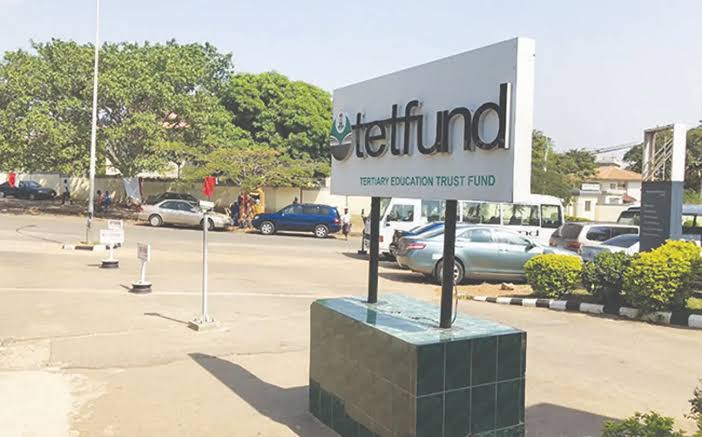
The Board of Trustees of the Tertiary Education Trust Fund (TETFund) has announced that tertiary institutions with delayed or abandoned intervention projects will not be eligible for new projects under the 2027 intervention cycle unless they complete outstanding works.
The directive, issued by the board’s chairman, Aminu Masari, is intended to address persistent delays in the execution of TETFund-funded infrastructure projects across beneficiary institutions.
According to TETFund, institutions with projects delayed by more than six months must submit a comprehensive list of affected projects, explain the reasons for the delays and provide cost estimates and plans for their completion. The institutions will also be required to prioritize completing existing projects using their annual, zonal and high-impact intervention allocations.
Masari said the board had introduced a special intervention in 2023 to help institutions complete projects affected by rising construction costs, including increases in the prices of cement, reinforcement bars, sanitary fittings and electrical materials. A recent review, he said, showed that many stalled projects had since been completed.
Despite that progress, TETFund said some institutions continue to record delays, attributing the problem to leadership transitions, the abandonment of ongoing projects in favor of new ones and delays in processing payments to contractors.
To improve project delivery, TETFund directed beneficiary institutions to strengthen oversight through their Physical Planning and Maintenance Departments to ensure projects are completed on schedule, within budget and in line with required standards.
Monitoring teams comprising members of the Board of Trustees and technical staff will inspect affected projects in August and September 2026. Their findings will inform decisions on projects eligible for inclusion in the 2027 intervention guidelines, which are expected to be considered at the board’s statutory meeting in October.
The policy is expected to encourage timely project completion, improve accountability in the use of public education funds and ensure that infrastructure investments deliver their intended benefits to Nigeria’s tertiary education sector.











Leave a comment