


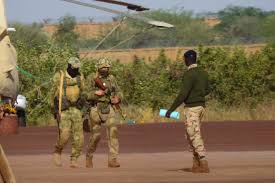
In a significant shift in West Africa’s security landscape, the Russian mercenary group Wagner has announced its full withdrawal from Mali after more than three years of operations. The group claims it has completed its mission of supporting the Malian government in its fight against armed rebels and securing Russian interests in the Sahel region.
Wagner’s exit marks the end of a controversial chapter in Mali’s battle against ethnic Tuareg separatists and jihadist groups affiliated with ISIL (ISIS) and al-Qaeda. The group had stepped in following the withdrawal of French forces in 2021 after a military coup in Mali, which led to a breakdown in relations between Bamako and its Western allies.
Now, taking Wagner’s place are operatives from the newly formed Africa Corps a Kremlin-controlled paramilitary organization that experts say is more than just a rebranded version of Wagner. While their mission may appear similar on the surface, analysts note that the Africa Corps operates with clearer ties to the Russian state, suggesting a shift towards more formalized Russian influence in the region.
According to Flore Berger, senior analyst at the Global Initiative’s North Africa and Sahel Observatory, Mali turned to Wagner and Russia due to growing frustration with Western military support. “Despite years of help, the security situation hadn’t improved, and Western countries continued to pressure the junta to restore civilian rule and hold elections,” she said. “Russia, through Wagner, was perceived as a more respectful and consistent partner that wouldn’t interfere in Mali’s internal politics.”
As Wagner departs and Africa Corps remains, the future of Russian paramilitary involvement in Mali appears to be evolving. Rather than diminishing, Russia’s presence in West Africa may be taking on a more state-directed and strategic form, ensuring that its geopolitical ambitions in the Sahel continue through new channels.









Leave a comment