


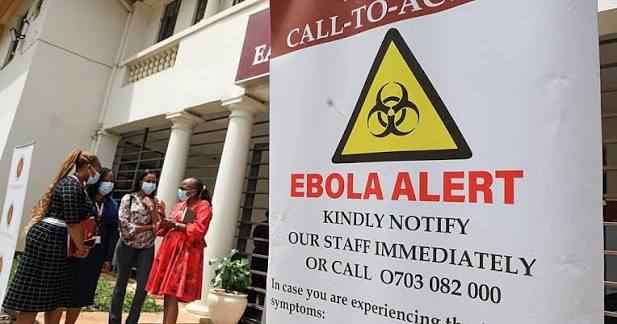
Residents in a Kenyan border town have expressed fear over the risk of Ebola spreading from neighbouring Uganda after Kenya recorded its first death from the disease earlier this month, raising concerns about the effectiveness of cross-border health screening.
The concerns follow the death of a 40-year-old Kenyan businessman who had been living in the Democratic Republic of the Congo (DRC). The man travelled overland through Uganda before flying to Nairobi on October 3, where he was later diagnosed with Bundibugyo Ebola virus disease. He died on October 5.
Residents in the border region said they were worried about people crossing between Kenya and Uganda without adequate health checks. Some called for prevention measures to be extended beyond major towns and formal entry points into rural communities.
“I plead with governments to move these measures deep down the villages,” said Ramadhan Wahatenze, a Ugandan who works in Kenya and crosses the border daily, according to Africanews.
Kenyan authorities have pledged to strengthen Ebola screening at entry points and trace people who may have come into contact with the deceased.
The Ministry of Health initially identified 28 contacts, including relatives and healthcare workers, and began tracing 23 passengers and four crew members who travelled on the same flight as the patient. Authorities said quarantine arrangements were being prepared for people considered at risk.
However, the case has raised questions about how the patient travelled through several locations while experiencing symptoms associated with Ebola, including fever, chills, fatigue, muscle pain, a sore throat and bleeding beneath the skin at injection sites.
Kenya’s Director General for Health, Patrick Amoth, questioned how the patient had been able to travel despite his symptoms, highlighting the need for stronger screening and surveillance.
The World Health Organization and regional health agencies have been monitoring the situation as Kenya works to prevent further transmission.
On October 11, Reuters reported that Kenya had detected no additional Ebola cases after testing 293 samples following the patient’s death. Health authorities continued contact tracing and surveillance.
The Africa Centres for Disease Control and Prevention has also said it would support Kenya’s response, including through a team sent to assist local authorities.
The death in Kenya is linked to the wider Ebola outbreak in the DRC, where the Bundibugyo strain has spread across several provinces. The outbreak has challenged health workers in areas affected by insecurity, limited resources and mistrust of public health interventions.
The Bundibugyo strain has no approved vaccine or specific treatment, making early detection, infection prevention and contact tracing especially important.
Kenya has urged residents not to panic, while encouraging people to follow official health guidance, practise hand hygiene and seek care promptly if they develop symptoms. The situation has also underscored the importance of coordination between neighbouring countries, particularly in communities where residents and traders cross borders frequently.
For residents of the border region, the priority is ensuring that screening and public health information reach rural communities as well as airports and major crossing points.












Leave a comment