


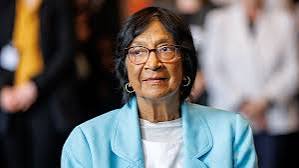
South African jurist and 2026 Nobel Peace Prize laureate Navi Pillay has called on people and governments worldwide to defend international law, warning that attacks on international judicial institutions threaten efforts to hold powerful states and individuals accountable.
Pillay made the appeal in an interview with the Associated Press on Monday, October 12, following her recognition for promoting peace and international law. She urged countries to move beyond verbal support for international justice and take collective action to protect the institutions responsible for enforcing it.
The 85 year old jurist said respect for the law was particularly important among national leaders, who have a responsibility to uphold international legal principles and set an example for their citizens.
“Heads of countries have a particular responsibility to spell out the principles, which is that you respect the law, you respect international law,” Pillay said.
Her comments followed the United States government’s announcement of new sanctions against the International Criminal Court (ICC), where she previously served as a judge. The measures were announced hours after the Nobel Committee named her this year’s laureate.
Pillay criticised the sanctions as unlawful and harmful to international justice, calling on countries to defend the court and the broader international legal system. She said the response should involve concrete action rather than statements of support alone.
The ICC investigates and prosecutes individuals accused of genocide, war crimes, crimes against humanity and the crime of aggression under its jurisdiction. Its work has faced opposition from some governments, including the United States, which is not a party to the Rome Statute establishing the court.
Pillay’s Nobel recognition reflects a career spanning South African anti-apartheid legal advocacy, international criminal justice and United Nations human rights work. She defended activists during apartheid, served as a judge at international tribunals and was United Nations High Commissioner for Human Rights from 2008 to 2014. She also chaired a United Nations commission of inquiry into the occupied Palestinian territory.
The commission concluded that Israel had committed genocide against Palestinians in Gaza, a finding rejected by the Israeli government. The conclusions have become a point of international dispute, with Pillay defending the commission’s work and its reliance on evidence.
During her work on the International Criminal Tribunal for Rwanda, Pillay also contributed to landmark legal developments recognising that rape and sexual violence could constitute crimes against humanity and acts of genocide in the circumstances established by the tribunal.
The Norwegian Nobel Committee said her work had helped advance accountability for war crimes, crimes against humanity and genocide, describing international law as essential to resolving conflicts peacefully.
Pillay said the public’s demand for justice remained strong despite growing pressure on international institutions. She urged people to examine evidence carefully, resist misinformation and avoid accepting political slogans without scrutiny.
Her appeal comes amid wider debate over the authority of international courts, the enforcement of their decisions and the ability of global institutions to hold powerful actors accountable.
The Nobel laureate said defending international law required sustained public engagement and coordinated action by governments, legal institutions and citizens to preserve the principles underpinning international justice.










Leave a comment