


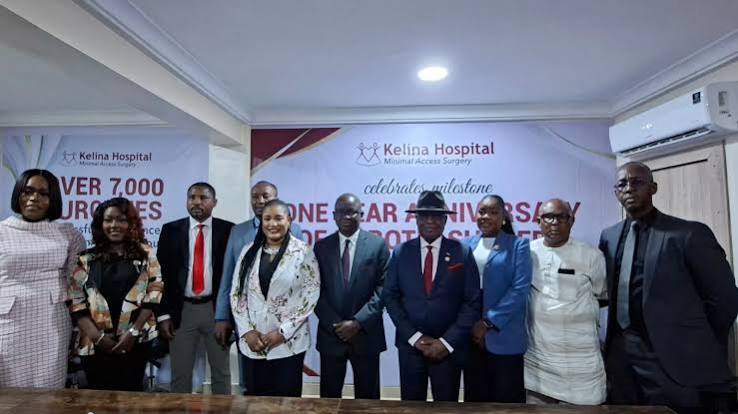
Kelina Hospital has performed more than 50 robotic assisted prostate cancer surgeries within a year, highlighting the growing availability of advanced surgical treatment in Nigeria.
The hospital’s president, Dr. Celsus Undie, a consultant urological surgeon, announced the milestone at a news conference in Lagos on Saturday to mark the first anniversary of its robotic surgery programme. The procedures involve removing the prostate gland and surrounding tissue to treat prostate cancer.
Undie said the hospital had been conducting robotic prostate surgery weekly since June 2026. He added that the programme was being run by Nigerian surgeons based in the country, reducing patients’ need to travel abroad for specialised treatment.
Robotic assisted radical prostatectomy is a minimally invasive procedure in which surgeons control specialised instruments through a robotic system. The technology provides enhanced visualisation and instrument control, although suitability and outcomes vary according to each patient’s condition.
Undie said prostate cancer was the most commonly diagnosed cancer among Nigerian men and stressed the importance of detecting and treating the disease before it spreads.
He acknowledged that surgery carries a risk of temporary or lasting erectile dysfunction because nerves responsible for erections run close to the prostate. Some patients recover function naturally, while others may require medication or additional treatment.
The hospital also highlighted its experience in other complex procedures, including a robotic radical nephrectomy, which involves removing a kidney, performed in Nigeria in 2025. It said more than half of its patients undergoing urological surgery were discharged within 24 hours, although recovery times depend on the procedure and individual circumstances.
Kelina Hospital’s board chairman, Ifeanyi Anago, said the institution had surpassed 7,000 surgeries since beginning operations in 2008. Its chief medical director, Dr. Kenechi Nedosa, said advances in robotic and minimally invasive surgery were helping expand treatment options for patients in Nigeria.
Prostate cancer remains a significant public health concern in Nigeria. Estimates cited by the News Agency of Nigeria indicate that the country records approximately 24,396 new cases and 15,176 deaths annually.
The hospital’s milestone comes amid broader efforts to expand access to specialised treatment and reduce medical travel abroad. However, the wider benefits of robotic surgery will depend on affordability, access to trained specialists, reliable equipment and appropriate patient selection.
Expanding local surgical capacity could help more patients obtain specialised care within Nigeria, but early detection, timely diagnosis and access to comprehensive cancer treatment remain essential to improving outcomes.










Leave a comment