
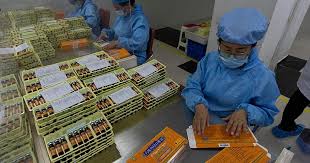
Central Africa is facing a growing public health threat from the trafficking of counterfeit, substandard and unauthorised medicines, with weak access to affordable healthcare helping to fuel an expanding illicit market, according to a new United Nations report.
The report, produced by the United Nations Office on Drugs and Crime, the World Health Organization and the Economic and Monetary Community of Central Africa, found that authorities seized at least 251 tonnes of medical products across the region between 2020 and 2025.
The seizures involved Cameroon, the Central African Republic, Chad, the Republic of Congo, Equatorial Guinea and Gabon. The products included antibiotics, antimalarial medicines, anti inflammatory drugs, painkillers and psychoactive substances such as tramadol and pregabalin.
Annual seizures increased from about five tonnes in 2020 to nearly 116 tonnes in 2024, before exceeding 97 tonnes in 2025. Cameroon accounted for 96 tonnes of the products seized in 2025, compared with about 2.5 tonnes recorded there five years earlier. The UN cautioned, however, that higher seizures can reflect both increased trafficking and stronger enforcement, rather than providing a direct measure of the size of the illicit market.
The report said the illegal trade extends beyond deliberately falsified medicines. Criminal networks also divert genuine medicines from regulated supply chains and national health programmes, distribute unapproved products and smuggle medicines across borders.
The medicines enter Central African markets through maritime and river ports, airports and major road networks. The ports of Douala in Cameroon, Apapa in Nigeria, as well as river ports in Brazzaville and Bangui, were identified as important entry points. Authorities also seized 7.3 tonnes of medical products at airports across the region between 2020 and 2025.
UNODC Regional Representative for West and Central Africa Sylvie Bertrand said the trafficking network uses multiple transport routes and involves a wide range of actors.
The report also linked the illicit pharmaceutical trade to organised crime and armed groups. In the Central African Republic, armed groups have reportedly looted health facilities, resold medicines and imposed levies on shipments passing through areas under their control.
Health systems under pressure
The report identified limited access to safe and affordable medicines as a major factor driving demand for illicit products.
Malaria, tuberculosis and HIV remain significant health challenges in the region, while shortages, high prices and long distances to health facilities can push patients toward informal medicine markets. In the Central African Republic and Chad, more than half of the population was reported to live at least two hours from a public hospital providing emergency care.
WHO surveillance recorded incidents involving 228 medical products in the Central African economic bloc between 2013 and 2025. Of those, 71 percent were classified as falsified and 11 percent as substandard. About one third of the incidents were detected within regulated supply chains, highlighting the difficulty of preventing illicit products from entering formal distribution channels.
WHO has previously warned of falsified medicines in the region. In April 2025, it issued an alert over falsified HEALMOXY amoxicillin capsules detected in Cameroon and the Central African Republic. Laboratory analysis found that the products did not contain the active ingredient stated on their labels.
The consequences can include treatment failure, poisoning and preventable deaths. Poor quality medicines can also contribute to antimicrobial resistance by exposing patients to inadequate doses or ineffective treatments.
The UN report cited the deaths of 12 children in Cameroon in 2023 after they took a paediatric syrup containing contaminated ingredients.
Calls for stronger regional action
The UN agencies said tackling the problem requires more than seizures and border enforcement. They called for stronger cross border cooperation, harmonised laws, improved surveillance and better controls throughout pharmaceutical supply chains.
They also stressed the need to increase access to safe and affordable medicines, arguing that enforcement alone cannot eliminate a market sustained by gaps in legitimate healthcare provision.
The challenge is also receiving wider continental attention. In May 2026, WHO and the African Medicines Agency launched a framework aimed at strengthening regulatory cooperation, harmonising systems and improving surveillance of substandard and falsified medical products across Africa.
For Central African countries, strengthening pharmaceutical regulation, border controls and supply chain monitoring while expanding access to affordable medicines will be critical to protecting patients and limiting the influence of criminal networks in the health sector.
The UN said no single country can effectively address the transnational trade alone, underscoring the need for coordinated regional action involving health authorities, regulators, customs agencies, law enforcement and other stakeholders.









Leave a comment