


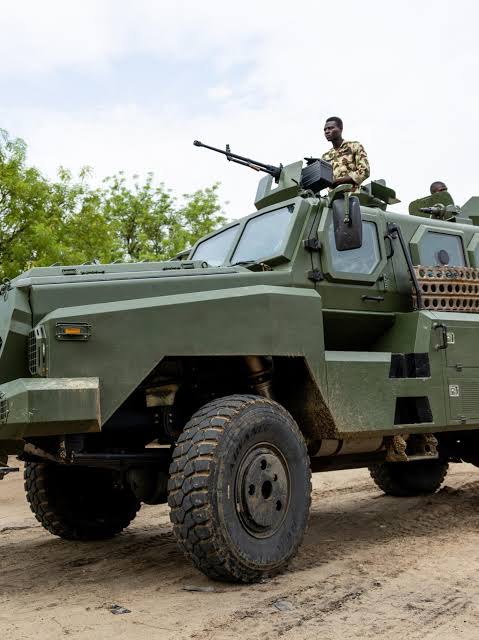
Nigeria is establishing a new tri-border military sector with Benin and Niger to plug a growing security gap along its northwest frontier, as jihadist groups linked to Al Qaeda and the Islamic State push southward from the Sahel and test the edges of Nigerian territory. Defence Minister Christopher Musa confirmed the plan on Thursday, describing it as a work in progress while making clear that the threat driving it is immediate and serious.
The creation of a dedicated tri-border military structure reflects a recognition in Abuja that conventional bilateral security arrangements are no longer adequate for a threat that moves fluidly across multiple borders. Armed groups from Burkina Faso and Benin have been infiltrating Nigeria’s northwest in growing numbers, reshaping a conflict that Abuja has spent over a decade managing primarily in the northeast, where the homegrown Boko Haram insurgency began in 2009. The geographic spread of the threat has forced a corresponding expansion of Nigeria’s security architecture.
The political context of the cooperation with Niger is worth noting. Niger is governed by a military junta that broke with the regional West African bloc ECOWAS and joined the Alliance of Sahel States alongside Burkina Faso and Mali. Relations between Abuja and Niamey at the political level have therefore been complicated. Musa acknowledged this directly, but was clear that security pragmatism has prevailed. “Politically, there is always that issue, but militarily, we have been able to go beyond that,” he said, adding that authorities in Niamey understand “how important it is not to allow any gaps to exist.” The statement reflects a calculation that whatever the diplomatic distance between the two governments, a porous shared border serves neither country’s interests.
Musa also said he plans to visit Burkina Faso, Mali and Niger in the coming months, a diplomatic outreach that underscores the same logic. All three countries are governed by military rulers who have repositioned themselves away from France and ECOWAS and toward Russia. Nigeria’s engagement with them on security matters is not an endorsement of their political choices. It is an acknowledgement that the jihadist threat does not pause for ideological disagreements between governments, and that containing it requires talking to whoever controls the territory through which it moves.
The evolving nature of the threat inside Nigeria itself is also becoming clearer. Militants appear to be shifting their operations within the country, no longer confined to the northeast where they have historically been concentrated. A recent school kidnapping in the southwest was attributed to jihadists, a development that, if confirmed, would represent a significant and alarming expansion of the conflict’s geographic reach. The prospect of jihadist activity extending into Nigeria’s more densely populated and economically vital southern regions is one that Abuja is understandably treating with urgency.
Nigeria is already working with a range of security partners beyond its immediate neighbours. United States forces have conducted strikes against militants operating within or near Nigerian territory, and Beninese forces and militias have operated in and alongside Nigeria with official approval. The new tri-border sector adds another layer to a security architecture that is growing more complex as the threat itself becomes harder to contain.
Underlying all of this is a political deadline that is sharpening the urgency in Abuja. Nigeria is scheduled to hold a presidential election in January, and officials are acutely aware that rising insecurity in conflict-affected areas could suppress voter turnout and undermine the legitimacy of the process. A government facing an election in six months has strong incentives to be seen acting decisively on security, and the announcement of the tri-border military sector is both a genuine operational step and a signal that Abuja is taking the threat seriously. Whether the new structure is operational in time to make a measurable difference on the ground is a question that the coming months will answer.











Leave a comment