


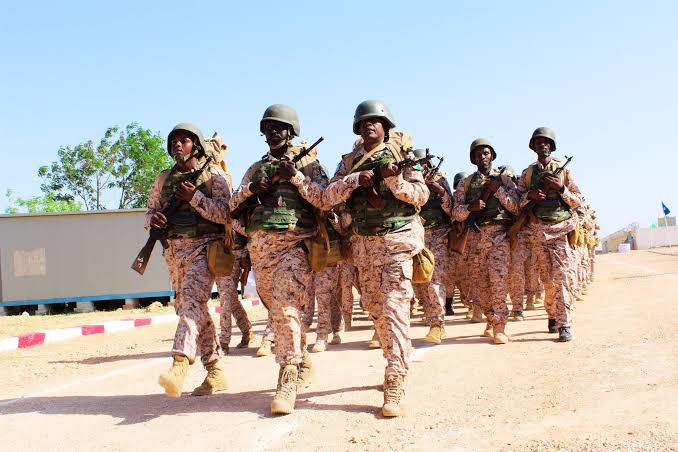
The United States has told the African Union that it will block any spending of United Nations funds on the AU Support and Stabilisation Mission in Somalia, known as AUSSOM, a decision that could effectively end one of the continent’s most significant and long-running peacekeeping operations. The move, communicated through a diplomatic note to the African Union seen by Reuters, raises immediate and serious questions about the future of stability in Somalia and the broader capacity of the African Union to sustain peace operations without reliable international financial backing.
AUSSOM has been operating in Somalia since 2009, deployed to support the country’s beleaguered federal government against the threat posed by the militant group al-Shabaab and to provide the stability necessary for the country to rebuild its institutions. The mission comprises troops from Uganda, Kenya, Ethiopia, and several other contributing nations. It relies heavily on United Nations support to cover logistics, medical services, and the transportation of troops. Without that support, the mission’s ability to function is in serious doubt.
The financial picture was already difficult before Washington’s intervention. AUSSOM’s budget for last year stood at $190 million, but the mission had been facing a significant funding shortfall even before the United States took this step. The US is one of the largest contributors to the UN Support Office in Somalia, whose total budget is projected to exceed $500 million this year. The withdrawal of that backing does not just create a gap. It threatens to pull away a foundational pillar of the entire operation.
The African Union has moved quickly to inform members of its Peace and Security Council of Washington’s decision, warning that the implications for the mission’s future are severe. The warning is not an overstatement. A peacekeeping force that cannot pay for logistics cannot move troops. A mission that cannot provide medical services cannot protect the health of its personnel. And a stabilisation effort that runs out of money mid-operation does not simply pause. It collapses, and the consequences of that collapse fall on the Somali people who depend on its presence.
The decision sits within a broader pattern of the Trump administration’s increasingly hostile posture toward Somalia. President Donald Trump has publicly blamed the Somali government for the presence of Somali migrants in the United States and has imposed a travel ban on the country. The blocking of UN funding for AUSSOM appears to be another expression of that hostility, though its consequences extend far beyond any bilateral grievance. The peace mission in Somalia is not simply a service to the Somali government. It is a regional and international investment in the stability of the Horn of Africa, an area whose instability has historically generated consequences, including piracy, terrorism, and mass displacement, that reach well beyond Somalia’s borders.
For the troop-contributing countries, Uganda, Kenya, Ethiopia and others, the US decision creates an urgent and unenviable dilemma. They must now decide whether to continue a mission whose funding model has just been seriously disrupted, seek alternative financing arrangements that may not materialise quickly enough, or begin planning for a drawdown that would leave Somalia in a significantly more vulnerable position than it was before the mission began. None of those options is without cost, and all of them will be made harder by the speed and abruptness with which Washington has moved.
The African Union built AUSSOM on the understanding that international partners would share the burden of sustaining peace in one of the world’s most fragile states. That understanding has now been upended by a unilateral decision made in Washington. What happens next in Mogadishu, in Nairobi, in Addis Ababa, and in the corridors of the African Union will determine whether the gains made over 17 years of difficult, costly, and often dangerous peacekeeping work can be preserved, or whether they are about to be undone.







Leave a comment