


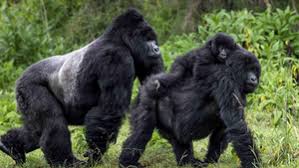
Mountain gorillas share more than 98 percent of their DNA with humans. That extraordinary biological closeness is part of what makes them so remarkable to encounter and so important to protect. It is also, right now, what makes them dangerous to be near. As the Ebola outbreak in eastern DR Congo and Uganda intensifies, conservationists are racing to ensure that the same virus devastating human communities does not cross into gorilla populations that would be equally, if not more, vulnerable to its effects.
Gladys Kalema-Zikusoka, a veterinary doctor and gorilla conservationist, is one of those leading the effort. She is clear-eyed about the stakes. “We are in a very critical time of Ebola. It is one of the diseases we are concerned about that can spread between people and wildlife,” she says. Uganda’s gorillas have never contracted Ebola, but the regional history offers no comfort. “Ebola has been happening in the western lowland gorillas, in Gabon and in the Republic of Congo, not DRC, Democratic Republic, but the neighbouring Congo Brazzaville. Over 5,000 gorillas have died of Ebola in the past 30 years,” she adds. Five thousand animals, from a species already teetering on the edge of extinction, lost to a disease that also kills the humans who share their forests.
The response on the conservation side has been practical and swift. An NGO called Conservation Through Public Health has donated 25 non-contact infrared thermometers, 450 sets of rain gear, and more than 30 smartphones to the Uganda Wildlife Authority. The equipment is designed to serve a dual purpose: protecting rangers, guides, and tourists who move through gorilla habitats from bringing the virus into contact with the animals, while also maintaining the surveillance systems needed to detect any signs of illness among the gorilla populations themselves.
James Musinguzi, executive director of the Uganda Wildlife Authority, described why the donation matters. “These are very, very critical equipment at this time because we are going to use them for surveillance of our animal health and visitors’ health. We shall use the thermometer to take temperatures, we shall of course use the rain gear to make sure that the rangers, the guides and everybody who is working in the tropical forest of Bwindi are protected from rain, and of course the phones are going to be used to capture data.” The Bwindi Impenetrable Forest, home to roughly half of the world’s remaining mountain gorilla population, sits at the centre of these protection efforts.
One option that might appear obvious, closing the forest to tourists entirely, is in fact one of the more dangerous choices available. The logic runs counter to instinct but is well established in conservation practice: tourism is what gives gorillas economic value to local communities, and that value is what keeps poaching in check. Kalema-Zikusoka has lived through what happens when that equation breaks down. “We need these people to come to pay money, which will stop people entering the forest to poach because during the pandemic, when tourism disappeared for 6 months, poaching really went up and that is when we lost Rafiki, a friendly silverback gorilla of the Nkuringo group. We don’t want to have any more losses during this outbreak,” she says. Rafiki’s death during the COVID-19 tourism shutdown is a reminder that the threats facing gorillas are never singular, and that protecting them requires holding multiple risks in balance simultaneously.
The broader outbreak that frames all of this continues to worsen. The Africa CDC has described the current Ebola outbreak in Congo and Uganda as the worst in recorded history during its first month. With 894 confirmed cases and 204 deaths at the time of the latest figures, the outbreak is already three times worse than a previous Ugandan outbreak in 2000 at the equivalent point in its progression. Up to 35,000 suspected potential contacts still need to be traced. And because the outbreak is believed to have begun weeks before it was officially confirmed on 15 May, the true number of cases is likely higher than current figures reflect.
Against that backdrop, the effort to protect Uganda’s mountain gorillas is not a peripheral concern. It is a reminder that Ebola’s reach, left unchecked, does not stop at the edge of human settlements. The forest is connected to the communities around it, and the communities are connected to the crisis unfolding across the region. For the gorillas of Bwindi, the thermometers and rain gear and smartphones now in the hands of their guardians may be the difference between surviving this outbreak and becoming its next victims. The conservationists watching over them are determined not to lose another Rafiki.










Leave a comment