


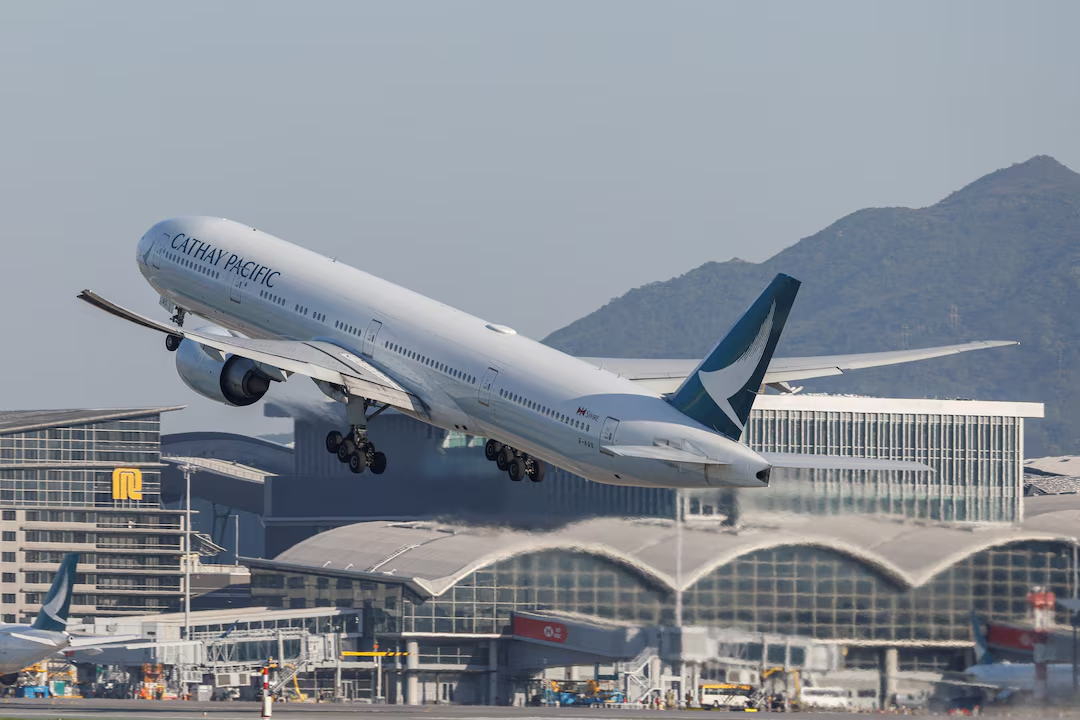
Holiday plans around the world are being thrown into disarray as the ongoing conflict involving Iran disrupts global air travel, forcing airlines to cancel or reroute thousands of flights and leaving travellers facing delays and rising costs.
Large parts of the Middle East airspace have been closed due to the risk of missiles and drones, affecting key aviation hubs such as Dubai, Doha and Abu Dhabi. The region serves as a major transit corridor connecting Europe, Asia, and Australia, meaning disruptions there quickly ripple across the global travel network.
Major Gulf airlines including Emirates, Qatar Airways and Etihad Airways have been forced to cancel or divert flights, particularly on busy routes between Europe and Australia or New Zealand.
For many travellers, the conflict has meant unexpected expenses and complicated journeys. An Australian family that had planned a five week European holiday reported paying about A$10,000 more to reroute their flights to avoid the conflict zone.
Others have faced long delays or unusual travel routes. Some passengers have had to travel across multiple countries by road to catch alternative flights after cancellations stranded them in the region.
The war has triggered widespread disruption across the aviation sector, with thousands of flights cancelled and major schedule changes worldwide. Analysts estimate more than 23,000 flights have been cancelled since the conflict escalated.
The economic impact on tourism is also significant. The Middle East tourism sector is losing around $600 million per day due to cancelled bookings, closed airspace, and safety concerns among travellers.
Popular holiday destinations such as Turkey, Greece, Cyprus and Egypt have also seen bookings decline as travellers grow cautious about visiting nearby regions.
Travel agencies say many tourists are postponing trips or choosing alternative destinations in Asia or other parts of Europe to avoid the uncertainty.
The crisis highlights how dependent global aviation is on Middle Eastern transit hubs, which handle a large share of long haul international flights between continents. When those routes are disrupted, it affects passengers far beyond the conflict zone.
Industry experts say travel disruptions could continue as long as the conflict persists, although the sector is expected to recover once stability returns.











Leave a comment