


The United States and Iran are meeting in Geneva on February 17, 2026 for a critical round of indirect nuclear negotiations under Omani mediation, aimed at easing a decades-long dispute over Tehran’s nuclear programme. The talks come amid a growing shadow of military threats and heightened regional tensions that have heightened global geopolitical and economic concerns.
U.S. envoys Steve Witkoff and Jared Kushner are leading the American delegation, while Iranian Foreign Minister Abbas Araqchi heads the Iranian side. The negotiations are intended to resume dialogue first started earlier this month in Oman, but there remains no clear sign of compromise as both sides hold firm on key issues, including uranium enrichment and missile capabilities.
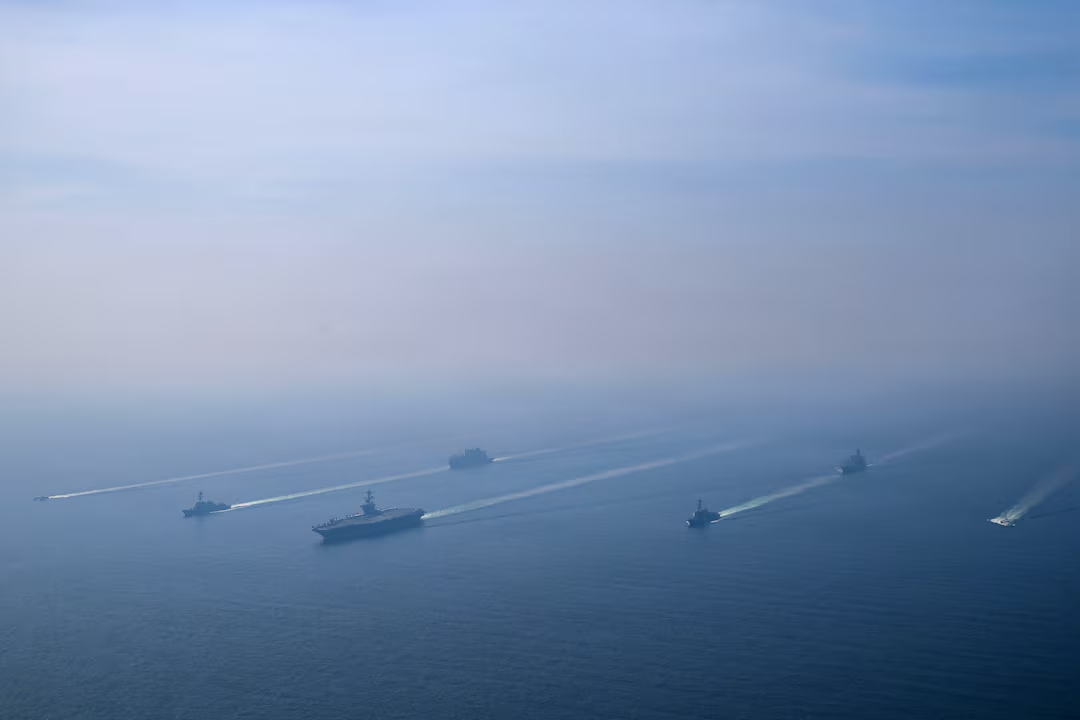
U.S. President Donald Trump has said he will be involved indirectly in the talks and argues that Iran knows the consequences of failing to reach a deal, referencing Washington’s past military operations against Iranian nuclear sites. At the same time, the U.S. military has massed a strong battle force in the Middle East, and officials say they are preparing for possible extended operations against Iran should diplomacy fail.
Strategic pressures accompany the talks. Iran’s Islamic Revolutionary Guard Corps (IRGC) launched naval drills in the Strait of Hormuz, a strategically critical waterway for global oil exports, underlining Tehran’s readiness to respond to potential military threats. Tehran insists that discussions remain focused on nuclear restrictions and sanctions relief, while Washington seeks to broaden the agenda to include Iran’s missile programme and regional influence.
Iranian authorities say their nuclear programme is for peaceful purposes, though Tehran’s enrichment of uranium above levels necessary for power generation remains a central sticking point. Western powers and close U.S. allies such as Israel maintain that Iran may be pursuing nuclear weapons capability, a position Tehran denies.
The negotiations are unfolding against the backdrop of broader instability, including large-scale street protests in Iran and ongoing military posturing. Tehran’s economic struggles under international sanctions have deepened political tensions at home, even as Iran continues to engage with international actors such as the International Atomic Energy Agency (IAEA) on technical cooperation.
How these Geneva talks unfold could shape not only U.S.–Iran relations but wider regional stability in the Middle East. Both sides face internal and external pressures: Washington underlines the importance of curbing Iran’s nuclear capabilities, while Tehran insists on preserving its sovereign rights and economic interests through sanctions relief.









Leave a comment