


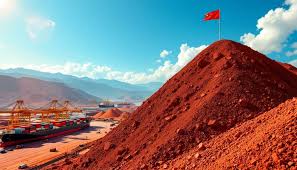
Guinea’s bauxite exports surged by 25 percent in 2025 to reach 182.8 million metric tons, according to official data seen by Reuters, reinforcing the West African country’s position as the world’s leading supplier of aluminium ore. The sharp increase highlights both Guinea’s growing importance in the global commodities market and the accelerating shift of its mineral exports toward China.
Bauxite is the primary raw material used in the production of aluminium, a metal that is critical to industries ranging from construction and transportation to renewable energy and defence. Guinea holds the largest known reserves of high grade bauxite globally, and in recent years has steadily expanded production capacity through new mines, rail infrastructure and port facilities, largely financed and operated by foreign partners.
The 2025 export figures underline the scale of that expansion. Shipments rose to their highest level on record, driven by strong demand from China, which accounted for an unprecedented 74 percent of Guinea’s total bauxite exports. Chinese customs data show that the bulk of Guinea’s output is now feeding China’s aluminium smelters, as Beijing seeks to secure long term access to raw materials amid tightening global competition for critical minerals.
China’s growing dominance in Guinea’s bauxite sector reflects a broader strategy of locking in upstream supply chains. Over the past decade, Chinese state owned and private firms have invested heavily in Guinea’s mining sector, building railways, ports and processing facilities in exchange for long term access to mineral resources. These investments have transformed Guinea into a cornerstone of China’s aluminium supply, reducing Beijing’s reliance on other producers and insulating it from market volatility.
For Guinea, the export boom has brought increased revenues and elevated its strategic importance on the global stage. Bauxite is now the backbone of the country’s export economy, accounting for the vast majority of foreign exchange earnings. The rapid growth in shipments has also supported infrastructure development and employment in mining regions, even as broader economic diversification remains limited.
However, the scale of China’s share of exports has raised questions about concentration risk and long term value creation. Analysts and civil society groups have repeatedly warned that Guinea’s heavy reliance on raw bauxite exports leaves the country vulnerable to external shocks and limits opportunities to develop local refining and aluminium production. Despite its vast reserves, Guinea still exports almost all of its bauxite unprocessed, capturing only a fraction of the potential value.
There are also environmental and social concerns linked to the rapid expansion of mining activities, including land degradation, displacement of communities and pressure on water resources. As production continues to rise, calls are growing for stricter oversight, stronger environmental standards and clearer frameworks to ensure that mining revenues translate into broader development gains.
With global demand for aluminium expected to remain strong, particularly as economies invest in energy transition technologies, Guinea’s role in the supply chain is likely to grow further. The 2025 export surge underscores both the opportunities and the challenges facing the country as it navigates its position between attracting foreign investment, managing strategic partnerships and ensuring that its mineral wealth delivers lasting benefits for its people.










Leave a comment