


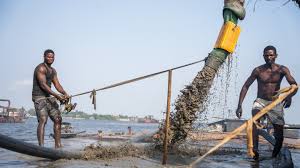
In Nigeria’s bustling megacity of Lagos, men lower buckets into the murky waters of the Lagos Lagoon, hauling up sand one bucket at a time. Each dive lasts roughly 15 seconds, and each load is destined for construction sites reshaping Africa’s largest city.
The work is laborious and low-paid. Filling a boat takes about three hours, earning a middleman roughly 12,000 naira ($8). Despite the physical strain, the demand for sand continues to grow, as it remains a critical ingredient in concrete. Dredgers and local traders report steadily rising prices, reflecting the city’s booming construction sector.
But the environmental cost is significant. Once an open stretch of water, the lagoon is now marked by sandy patches, narrowed channels, and shifting currents. These changes disrupt the habitats of thousands of fishermen who rely on the lagoon for their livelihoods.
Experts warn that unsustainable sand dredging could have long-term consequences for Lagos’ ecosystem, affecting water quality, fish populations, and the city’s flood resilience. While sand remains a lifeline for construction, the practices fueling the supply threaten both the environment and communities that depend on the lagoon.
The situation in Lagos highlights a broader challenge across rapidly urbanizing African cities: balancing development with environmental sustainability, and ensuring that economic gains do not come at the expense of fragile ecosystems and the people who rely on them.











Leave a comment