


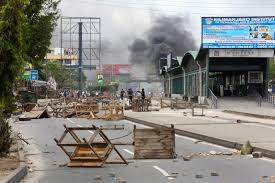
The nights following Tanzania’s October 29 elections were marked by a wave of violence that has left deep scars and raised troubling questions about the conduct of security forces. One of the most harrowing incidents occurred around 8.30 pm on October 31 in the Mjimwema neighbourhood of Mwanza, where residents were going about ordinary evening routines when police officers arrived and opened fire without warning.
Eyewitnesses told Reuters that panic quickly spread as gunshots rang out in different directions. Some men who sought safety inside a nearby café were reportedly ordered to lie face down on the ground before being shot. By the time the firing stopped, more than a dozen people were dead. Video footage later shared on social media and verified by Reuters showed 13 bodies lying motionless on blood soaked ground, offering stark visual evidence of the scale of the tragedy.
The massacre in Mjimwema is now regarded as one of the deadliest known episodes linked to the unrest that followed the elections. However, witness accounts suggest it was not an isolated incident. Reuters interviewed nine witnesses who described eight other cases of violence in Mwanza, as well as in Dar es Salaam and Arusha. In these accounts, police were seen shooting at people who were not protesting, sometimes far from any demonstration sites.
Together, these testimonies point to a broader pattern of violence that extended beyond crowd control and protest management. They raise serious concerns about the use of force during the election period and the protection of civilians, highlighting the urgent need for accountability, transparency, and an independent examination of what unfolded during those days.




Leave a comment