


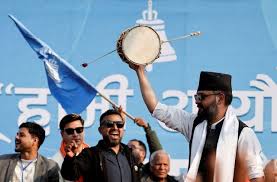
All eyes are on Balendra Shah the 35‑year‑old rapper‑turned‑politician and former mayor of Kathmandu as Nepal approaches its March 5 general election with the possibility that he will become the country’s next prime minister. Multiple political analysts and local news outlets report that Shah is currently leading the race to succeed the outgoing administration, a remarkable rise from his cultural roots to the forefront of national politics.
Shah first gained prominence in Nepali public life through his career as a rapper offering sharp critiques of the country’s traditional political establishment and later translated that popularity into electoral success. In 2022 he was elected mayor of Kathmandu as an independent candidate, campaigning on a platform of change, administrative reform and better urban services. His tenure as mayor, which included waste management improvements and infrastructure work, helped broaden his appeal beyond the cultural sphere.
The political landscape shifted dramatically following a youth‑led uprising in September 2025 that resulted in the resignation of then‑prime minister K.P. Sharma Oli. In the aftermath, Shah posted a message urging younger generations to take leadership of the country, a move that resonated strongly with younger voters and boosted his national profile.
In late 2025, Shah resigned as Kathmandu’s mayor and joined the Rastriya Swatantra Party (RSP), which has designated him as its prime ministerial candidate for the March elections. As a candidate of the RSP, he has championed job creation, reduced migration for work abroad, and ambitious socio‑economic goals including raising the nation’s per capita income and expanding healthcare coverage. Although there are no reliable national opinion polls, several analysts and media projections place him ahead of Nepal’s traditional political elite in the race.
Shah’s rise reflects broader public disillusionment with long‑standing political parties that have dominated Nepali politics for decades and a desire, particularly among younger voters, for new leadership and systemic change. However, political observers caution that even if elected, Shah’s success as prime minister will depend heavily on his ability to assemble experienced advisers and navigate Nepal’s entrenched bureaucratic and political structures.
Shah’s potential premiership would mark a significant shift in Nepal’s political culture, blending grassroots popularity and social media influence with formal governance roles, and could influence how youthful and non‑traditional candidates approach national leadership roles across the region.








Leave a comment