


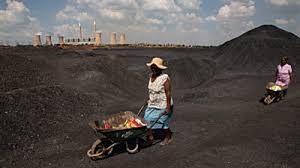
Deep beneath South Africa’s coal rich landscape, thousands of informal miners descend into pitch black tunnels each day, swinging pickaxes against rock in conditions that place their lives at constant risk. These men operate far from public view, yet their labour quietly sustains communities that depend on coal for warmth and survival.
South Africa remains one of the world’s leading coal producers, with the resource generating around eighty percent of the country’s electricity. In the eastern province of Mpumalanga, often described as the nation’s coal heartland, informal miners like Cyprial form an unseen backbone of local energy supply. Speaking under a pseudonym to avoid reprisals, Cyprial describes the dangers as ever present and unavoidable.
He explains that once underground, the fear of collapsing stone is something miners must suppress to keep working. The risk of death is real, but so too is the need to earn a living. For many, the choice is stark and survival leaves little room for hesitation.
Authorities label these workers illegal miners, but those involved reject the term. They describe their work as artisanal mining, arguing that while it lacks formal authorisation, it fulfils a critical social function. According to Jabulani Sibiya, who chairs an artisanal miners union in Ermelo, the coal extracted is transported directly to nearby communities where it is used for cooking and heating.
For residents in these areas, electricity produced locally is often unaffordable. Coal from informal mines therefore becomes an essential alternative, particularly during colder months. Despite this, the government has taken a firm stance against the practice. President Cyril Ramaphosa has described informal mining as a threat to the economy and national security, and law enforcement efforts to curb it have intensified.
Estimates suggest that more than forty thousand informal miners were operating in South Africa as recently as 2021, most of them in abandoned gold shafts. At the same time, the formal coal sector supports over one hundred thousand jobs across direct and indirect employment, highlighting the scale and complexity of the mining economy.
South Africa also faces mounting pressure to reduce its environmental footprint. Ranked among the world’s largest greenhouse gas emitters, the country entered into a landmark Just Energy Transition Partnership in 2021, securing significant international funding to shift away from fossil fuel based power generation.
In Mpumalanga, however, many fear that this transition could once again exclude marginalised communities. For local activists and artisanal miners, a just transition must mean more than replacing coal with renewable energy. They argue it should include pathways for small scale and community based mining that are sustainable, regulated, and inclusive.
Zethu Hlatshwayo of the National Association of Artisanal Miners believes that sustainability and social justice must go hand in hand. He argues that mining will not disappear entirely, even in a green energy future, as minerals remain essential for technologies such as solar panels and electric vehicles. What matters, he says, is ensuring that those historically pushed to the margins are not left behind.
Artisanal miners in Ermelo have applied collectively for a mining permit, but the process is slow and expensive. Until meaningful alternatives are created, informal mining is likely to continue beneath the coalfields.
For these communities, the promise of a just transition will ring hollow if it does not recognise their realities. True transformation, they insist, must balance environmental responsibility with economic inclusion, ensuring that progress does not come at the cost of those who have long laboured in the shadows.









Leave a comment