


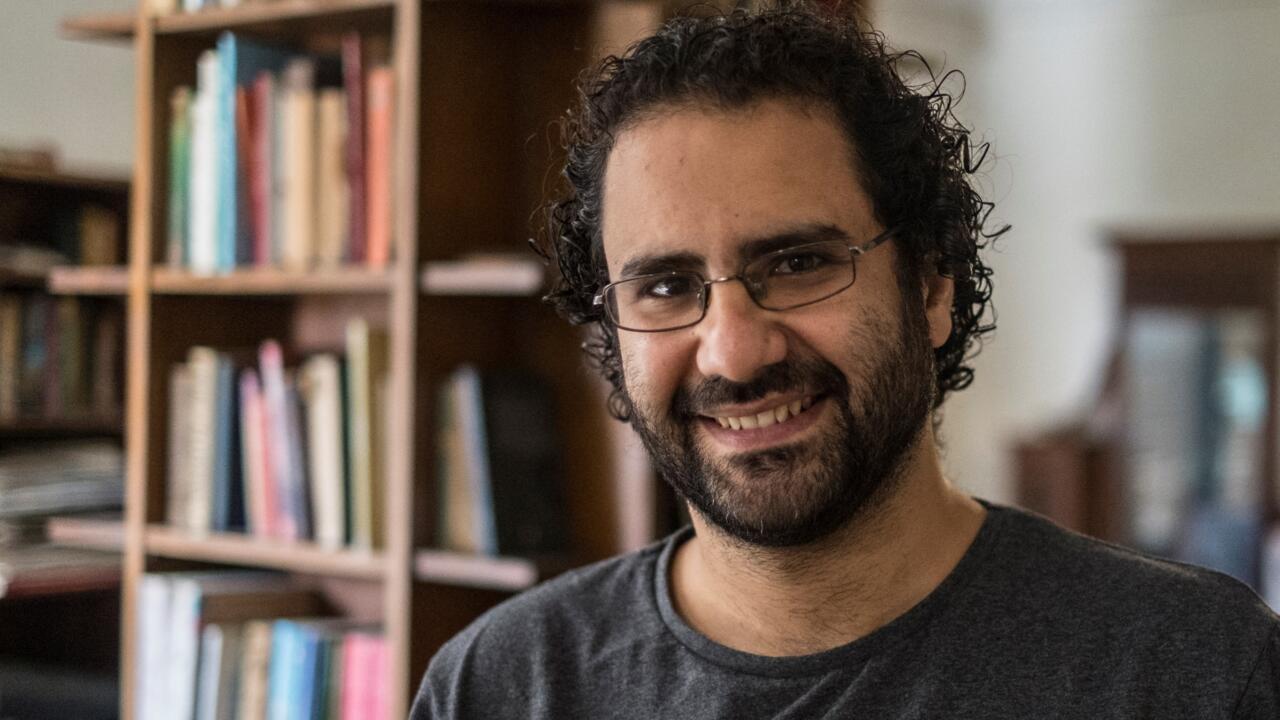
Egypt’s President Abdul Fattah al-Sisi has granted a presidential pardon to Alaa Abdel Fattah, the prominent British-Egyptian activist and blogger who has spent most of the last decade behind bars, state media and family sources confirmed. The decision marks a dramatic turn in one of the most closely watched political detention cases in Egypt’s recent history, with human rights groups and foreign governments long pressing for his release.
Abdel Fattah, 43, was one of six people whose sentences were commuted following a request by the state-backed National Council for Human Rights (NCHR). His sister, Mona Seif, expressed her shock and relief in a post on X, writing: “My heart will explode.” Another sister, Sanaa Seif, added: “President Sisi has pardoned my brother! Mum and I are heading to the prison now to inquire from where Alaa will be released and when… OMG I can’t believe we get our lives back!”
The news was later confirmed by his lawyer, Khaled Ali, who announced on Facebook that Abdel Fattah would be released from Wadi al-Natrun prison once the pardon is officially published in Egypt’s state gazette. For his family, the announcement ends a six-year ordeal that included prolonged hunger strikes, international advocacy campaigns, and repeated appeals to both Egyptian and British authorities.
Abdel Fattah first rose to prominence during the 2011 revolution that toppled long-time president Hosni Mubarak. Celebrated as one of Egypt’s most influential pro-democracy voices, he quickly became a symbol of the aspirations of the Arab Spring. But under President Sisi’s rule, his activism turned him into one of the country’s most high-profile prisoners. Arrested in 2019 amid a sweeping crackdown on dissent, he was later sentenced to five years in prison in 2021 on charges of “spreading false news” after sharing a social media post about the death of a fellow prisoner under torture. Human rights organizations widely condemned his trial as politically motivated and fundamentally unfair.
His family had long argued that his time in pre-trial detention — more than two years — should have been counted towards his sentence, which would have made him eligible for release in September 2024. Egyptian authorities, however, refused to credit that period. The prolonged imprisonment led to multiple hunger strikes by Abdel Fattah himself and a highly publicized nine-month strike by his mother, Leila Soueif, who lost over 40% of her body weight before ending it in July 2025 after assurances from the UK government that it was actively pressing for her son’s release.
The case had drawn intense international attention, especially during Egypt’s hosting of the UN Climate Conference in 2022, when Abdel Fattah’s deteriorating condition put pressure on Egyptian authorities from world leaders. Human Rights Watch welcomed the pardon, describing it as a potential “watershed moment” for Egypt to reconsider the detention of thousands of peaceful critics currently imprisoned.
For years, Egypt has faced criticism from rights groups for what they describe as an unprecedented crackdown on dissent under President Sisi, who came to power after the 2013 military overthrow of Mohamed Morsi, Egypt’s first democratically elected president. Tens of thousands of political prisoners are believed to remain in detention.
The National Council for Human Rights praised the pardon, calling it “a step that underscores a growing commitment to reinforcing the principles of swift justice and upholding fundamental rights and freedoms.” Two weeks earlier, Sisi had instructed authorities to review petitions from the NCHR calling for Abdel Fattah’s release “in light of the humanitarian and health conditions experienced by [their] families.”
Alaa Abdel Fattah’s release represents not just the freedom of one of Egypt’s most famous dissidents but also a symbolic moment in the country’s political and human rights landscape. Whether it signals a broader shift in Cairo’s treatment of political prisoners remains to be seen, but for his family, supporters, and international advocates, the long-awaited pardon is a moment of profound relief and renewed hope.









Leave a comment