


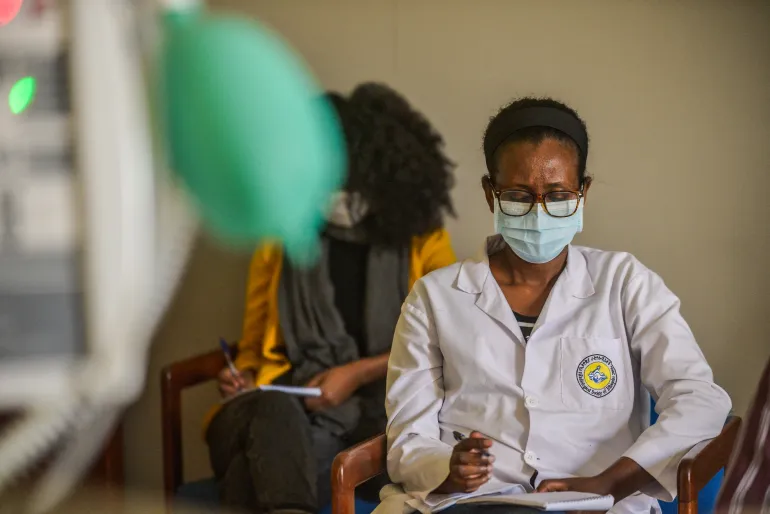
In mid-May, inside a busy hospital emergency room in Addis Ababa, Ethiopia, Dr. Tewodros* was treating patients when two police officers stormed in. Just weeks earlier, he had joined fellow health workers in a nationwide strike protesting poor working conditions and low pay. The government quickly declared the strike illegal, and Tewodros became one of more than 140 doctors arrested in a sweeping crackdown.
Dragged from his workplace without explanation, Tewodros spent over three weeks in detention, crammed into a cell with 15 others. He was denied contact with his family, unable to wash, and left feeling, in his words, “helpless and ashamed of my country.” Rights groups, including Human Rights Watch, accused the government of using repressive tactics, with at least 47 health workers arrested in the first days of the strike and dozens more detained in the following weeks.
The strike, organized by the Ethiopian Health Professionals Movement (EHPM), began after the government failed to respond to a 12-point list of demands. Doctors called for fair salaries, health insurance, transport allowances, and better workplace conditions. When talks collapsed, hundreds of doctors walked out of hospitals nationwide.
Ethiopian doctors are among the lowest paid in East Africa, earning as little as $60 per month, compared to nearly $1,800 in neighboring Kenya. Many struggle to cover rent, food, and transport costs. Some take on “side hustles” like pharmacy work, content creation, or driving for ride-hailing services just to survive. One doctor admitted spending two-thirds of his $73 monthly salary on rent, leaving little for food or healthcare.
Prime Minister Abiy Ahmed acknowledged that doctors are “being crushed by life” but dismissed striking health workers as “politicians in white coats.” The unrest comes as Ethiopia battles inflation, currency devaluation, and the aftermath of the Tigray conflict, which has left public services stretched to the breaking point.
Although all detained doctors have since been released and the strike ended after the government promised reforms, health professionals say no concrete changes have been made. Many remain disillusioned, facing daily struggles in a collapsing healthcare system.











Leave a comment