


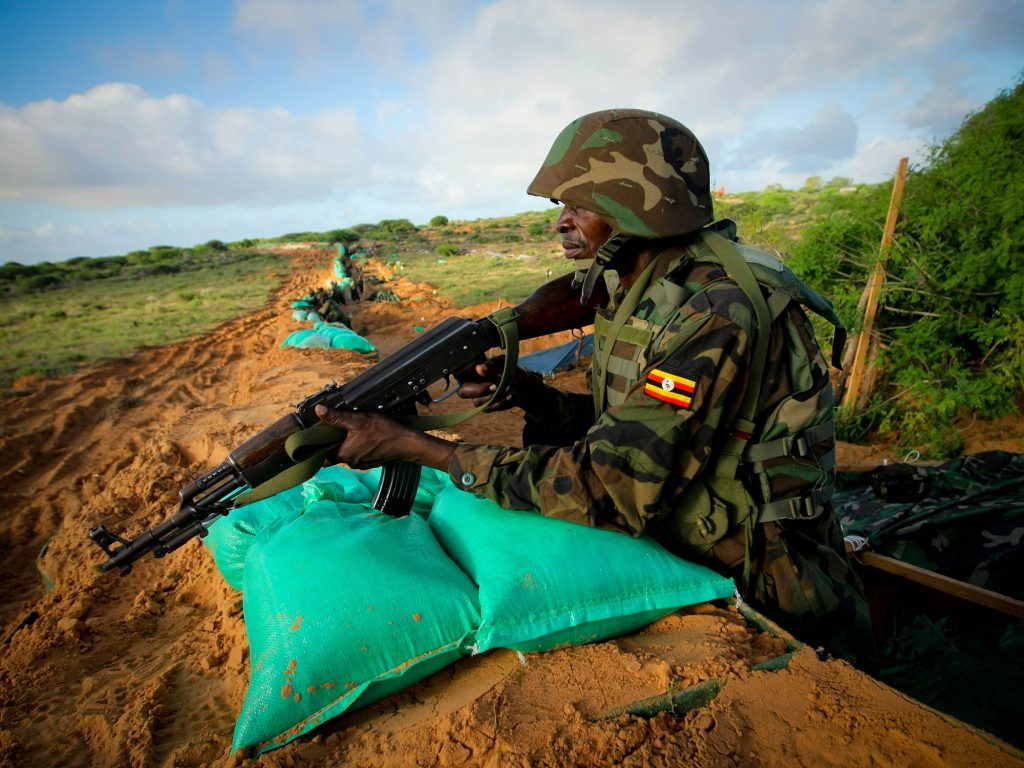
A newly released investigative report has revealed that the Uganda People’s Defence Forces (UPDF) are exerting sweeping influence across nearly every sector of Ugandan national life, threatening the country’s already fragile democratic structures. The seven-month investigation, conducted by political analysts Godber Tumushabe, Andrew Karamagi, Barnet Musasizi, and Job Kiija, exposes the rise of a “parallel military government” operating within the state apparatus.
The report outlines how the UPDF, while constitutionally mandated as a national and non-partisan institution, continues to operate as a loyal extension of President Yoweri Museveni’s administration. Museveni, who has ruled Uganda since 1986, is accused of leveraging the military not only to retain power but also to influence legislation, suppress dissent, and entrench authoritarian control.
Using academic frameworks, extensive interviews, and policy analysis, the authors highlight how the military’s expanding role spans the political, economic, law enforcement, religious, and cultural spheres. Notably, the March 2025 Kawempe by-election is cited as a recent example of violent military intervention, where armed forces were deployed to suppress opposition and intimidate voters.
The investigation further criticizes the military’s involvement in shaping key national policies and the increasing trend of appointing active or retired military officers to senior positions in civilian institutions. It concludes that Uganda’s transition to a full-fledged military state is underway unless urgent democratic reforms are implemented.
The findings come at a time when international human rights organizations and democracy watchdogs are sounding the alarm over Uganda’s backsliding on civil liberties, political freedoms, and fair electoral processes. Observers fear that without immediate intervention, Uganda could face deeper instability fueled by state-sponsored militarization and growing political repression.







Leave a comment