


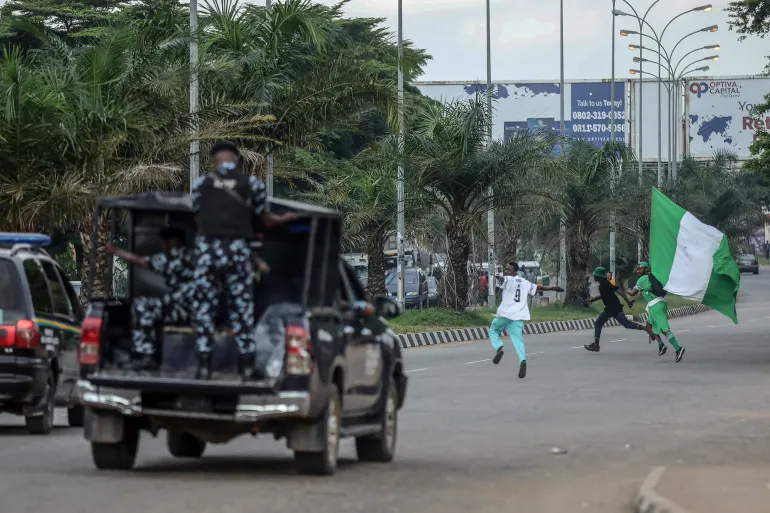
Across several Nigerian cities, widespread protests have erupted for the second time in two months, as citizens continue to decry worsening economic conditions. With food inflation at its highest levels in decades, businesses are closing, and many Nigerians are struggling to afford basic necessities, forcing them into desperate action. On Tuesday, demonstrators flooded the streets of Abuja and other major cities, demanding an end to what they describe as “anti-poor” policies that have exacerbated the country’s financial crisis.
In Abuja, the nation’s capital, police fired tear gas at crowds of protesters as they chanted calls for an end to hunger and poor governance. Despite fears of a violent crackdown—given the heavy police presence—protesters remained resolute in their determination to voice their frustrations. This resolve follows the tragic events of August, when several demonstrators were shot dead, and hundreds more were arrested during a similar wave of protests.
The latest demonstrations were timed to coincide with Nigeria’s 64th Independence Day celebrations, a day meant to reflect on the country’s journey since gaining freedom from British colonial rule in 1960. However, many citizens felt little reason to celebrate, as they grapple with the economic realities that continue to leave millions in hardship. With a population of over 200 million, the protesters argued that while the majority of Nigerians struggle to survive, government officials appear insulated from these economic pressures.
The protest movement has been fueled by opposition to fiscal policies introduced earlier in the year, including the removal of the fuel subsidy and the unification of foreign exchange markets, which have led to a steep increase in fuel prices and a sharp depreciation of the naira. These measures, recommended by international financial institutions, have been labeled as “anti-poor” by demonstrators, who argue that the government is more concerned with foreign interests than addressing the needs of Nigerians.
Demands from the protesters include reducing soaring electricity prices and releasing those detained during previous demonstrations. While some groups were dispersed by security forces in Abuja, protests gathered momentum in Lagos, Nigeria’s economic hub, where demonstrators defied gun-wielding security personnel to continue their march.
The economic impact of these policies has been severe. Inflation has caused food prices to triple over the past year, making it difficult for many families to afford three meals a day. Staples like rice and garri, once considered affordable, have become luxuries for many. Analysts point to a combination of global economic shocks, local insecurity, and mismanagement as factors contributing to the country’s economic woes. However, the fiscal reforms introduced since May have compounded the hardship, especially for the poorest in society.
While the government has implemented measures such as increasing the minimum wage and providing cash transfers to alleviate some of the pressure, critics argue that these actions fall short of addressing the full scale of the crisis. With inflation still rampant and insecurity disrupting local food production, many Nigerians remain unconvinced that the government’s policies will lead to meaningful relief.
Despite the heavy police presence and threats of further repression, protesters have vowed to continue until their demands are met. The movement’s leaders insist that the government must take concrete steps to reverse the economic hardship or face growing unrest from a population increasingly unwilling to accept its current plight.
As the protests continue to gather momentum, it is clear that many Nigerians believe the path forward must involve a fundamental shift in governance, one that prioritizes the well-being of its citizens above external economic interests.








Leave a comment