


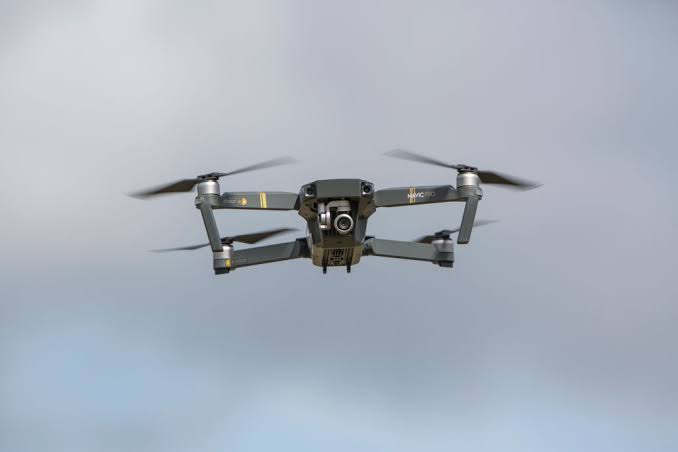
The Islamic State West Africa Province (ISWAP) has expanded its use of commercial drones, satellite communications and international financing networks to strengthen its insurgency in northeastern Nigeria, according to a new report by the Institute for Security Studies (ISS).
The report, titled Wiring the Insurgency: Inside ISWAP’s Adaptive Technology Programme, published in November 2026, examines how the militant group has adapted commercially available technology for intelligence gathering, propaganda and combat operations.
Based on interviews with 17 people, including former insurgents, security and intelligence officials, traders and researchers, the study reveals an increasingly organised technological ecosystem supported by connections to the wider Islamic State network.
According to the report, ISWAP initially used commercial drones for surveillance before developing capabilities to deploy them in offensive operations.
The group reportedly began modifying drones to carry improvised explosive devices by 2023. Its first recorded use of weaponised drones in direct combat occurred on Dec. 24, 2024, when four drones were deployed against the Nigerian Army’s Forward Operating Base in Wajiroko, Damboa Local Government Area of Borno State.
At least five soldiers were injured in the attack.
The report also documented an expanding campaign against military positions in Nigeria and neighbouring Cameroon. By July 2025, researchers had identified at least 15 successful attacks associated with the campaign.
Data from the Armed Conflict Location and Event Data (ACLED) project identified 16 drone-related incidents between 2024 and February 2026. Ten involved direct combat or bombing attacks, while six involved reconnaissance and intelligence gathering ahead of ground assaults.
Researchers said the drones had become important to ISWAP’s battlefield operations, helping fighters observe military positions, coordinate attacks and produce footage for propaganda.
The group has also established specialised workshops and training facilities in locations around the Lake Chad Basin to modify commercial equipment and develop weapons.
Beyond its drone capabilities, ISWAP has expanded its use of satellite communication technology to maintain contact between fighters and external networks, particularly in areas where conventional telecommunications services are unavailable or restricted.
The report identified Starlink and Thuraya satellite communication devices among the technologies used by the group.
It traced some supply routes from the United Arab Emirates through currency exchange operators in Kano, Nigeria, with additional routes passing through N’Djamena, Chad.
Lagos and Kano were also identified as important points in the wider supply networks through which commercial drones, communication equipment and other materials reach the insurgents.
The researchers said these networks often intersect with legitimate commercial activities, making it difficult for authorities to identify and disrupt transactions linked to militant operations.
The report further highlighted the role of Islamic State’s central leadership in providing ISWAP with technical guidance, financial support and media infrastructure.
This relationship gives the Nigerian group access to expertise and resources beyond its immediate area of operation.
The study also identified an internal payment arrangement known as ghanimah, under which fighters receive financial rewards for weapons captured during military raids and handed over to the group’s leadership.
Researchers said the system creates an additional incentive for attacks on military positions because successful raids can provide both weapons and financial rewards.
The arrangement also helps ISWAP replenish its arsenal without relying entirely on external weapons supplies.
The report described the group’s media department, known as the Ilan, as another important part of its organisational structure. The department coordinates propaganda activities and manages communications with external contacts.
At community level, the group reportedly relies on a network known as rijal-awam, which uses covert contacts among civilians to gather intelligence, organise logistics and support its parallel governance structures.
The findings raise concerns about the growing technological and financial sophistication of insurgent groups operating in the Lake Chad Basin.
The researchers called on Nigerian and regional authorities to strengthen military installations, expand counter-drone capabilities and improve intelligence gathering to respond to the changing tactics.
They also recommended greater use of information provided by former insurgents, closer monitoring of satellite communication equipment diverted into conflict zones and stronger action against transnational financial and supply networks.
The report stressed the need for improved coordination among security agencies and regional partners, particularly because the networks supporting ISWAP extend beyond Nigeria’s borders.
Its findings highlight the need for counterterrorism strategies to address not only armed attacks but also the commercial, technological and financial systems that enable militant organisations to sustain their operations.
The development comes as Nigeria continues its prolonged campaign against ISWAP and Boko Haram in the northeast, where years of insurgency have caused widespread displacement, disrupted livelihoods and placed sustained pressure on military and humanitarian resources.












Leave a comment