


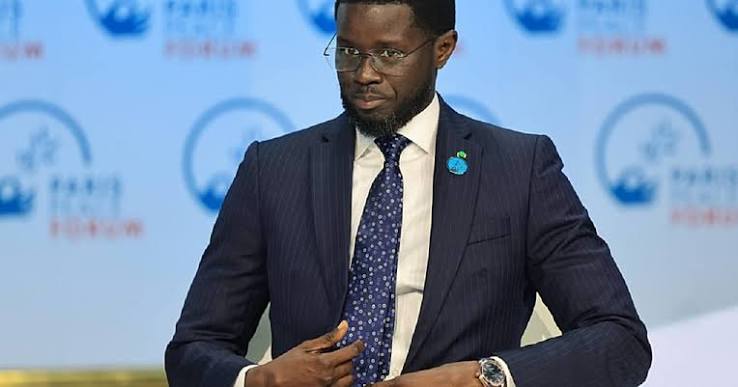
Senegalese President Bassirou Diomaye Faye has brought a revised 2026 budget into force by decree, bypassing parliament after lawmakers rejected the government’s proposals in a political standoff threatening a proposed $2.2 billion International Monetary Fund (IMF) financing programme.
The presidency announced the decision on Thursday, Nov. 19, saying Faye had acted in his capacity as guardian of the constitution and guarantor of the proper functioning of state institutions.
The move followed parliament’s rejection of the revised budget earlier in November and its subsequent rejection of the first part of the proposed 2027 budget on Wednesday.
The dispute has exposed deepening divisions between Faye and his former Prime Minister, Ousmane Sonko, whose Pastef party controls the National Assembly.
Sonko, who now heads parliament, has opposed the government’s budget proposals and criticised the debt restructuring process associated with the proposed IMF programme.
The IMF reached a staff-level agreement with Senegal on Sept. 1 for a three-year Extended Credit Facility worth approximately $2.2 billion. However, the arrangement still requires approval by the Fund’s management and Executive Board before funds can be disbursed.
The programme is intended to restore macroeconomic stability, address debt vulnerabilities, strengthen public financial management and support sustainable economic growth.
The IMF has insisted that Senegal complete agreed corrective measures relating to the misreporting of public debt, establish a credible budget framework and secure financing assurances from development partners before final approval.
Senegal’s financial difficulties intensified in 2024 after authorities uncovered previously undisclosed borrowing by the former administration. The hidden liabilities were estimated by analysts at about $13 billion.
The IMF subsequently revised its assessment of Senegal’s public-sector debt to approximately 132 per cent of gross domestic product at the end of 2024, raising concerns about the country’s ability to meet its financial obligations.
The government has been pursuing debt restructuring under the G20 Common Framework, a mechanism designed to coordinate debt treatment for eligible countries facing unsustainable debt burdens.
However, Sonko has criticised debt restructuring, arguing that it could undermine Senegal’s economic sovereignty. His disagreement with Faye over the approach has contributed to tensions within the governing political movement.
The IMF has maintained that it is not a party to Senegal’s internal political dispute. Its spokesperson, Julie Kozack, said the country’s authorities must implement the policies agreed with the Fund through Senegal’s own legal and institutional framework.
Meanwhile, Finance Minister Cheikh Diba has warned that failure to resolve the budget impasse could affect electricity supplies, payments to businesses and the settlement of salary arrears owed to teachers.
The government has also argued that the revised budget is necessary to accommodate higher energy costs, weaker revenue projections and increased debt-servicing obligations.
The president’s decision could help advance the IMF negotiations, but it has also raised questions about the relationship between the executive and legislature and the legal basis for implementing a rejected budget through a presidential decree.
Senegal’s political and fiscal challenges now present a dual test for the administration: restoring access to international financing while managing disagreements over economic policy and constitutional authority.
The IMF programme remains subject to further conditions and Executive Board approval, meaning the presidential decree does not automatically unlock the proposed $2.2 billion financing.



Leave a comment