


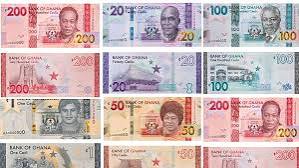
Ghana has unveiled a redesigned series of banknotes featuring prominent national figures, historic landmarks and traditional symbols as part of efforts to celebrate the country’s heritage and strengthen currency security.
President John Dramani Mahama launched the Ghana Cedi Heritage Series on Thursday, Nov. 12, at the Bank of Ghana headquarters in Accra.
The new banknotes will enter circulation on Dec. 1, 2026, and will initially circulate alongside the existing currency. The Bank of Ghana has assured the public that the current notes will remain legal tender during the transition.
The redesigned series retains the country’s eight denominations: GH¢1, GH¢2, GH¢5, GH¢10, GH¢20, GH¢50, GH¢100 and GH¢200.
Each denomination features a Ghanaian personality associated with a particular aspect of national development, alongside landmarks and Adinkra symbols reflecting the country’s cultural identity.
The GH¢1 note honours market trader Agnes Oforiwa Tagoe-Quarcoopome, while the GH¢2 features Cardinal Peter Dery. The GH¢5 celebrates educationist James Emman Kwegyir Aggrey, and the GH¢10 pays tribute to Ghana’s first female judge, Annie Ruth Jiagge.
The GH¢20 features composer and music scholar Ephraim Amu, while the GH¢50 honours Theodosia Okoh, designer of Ghana’s national flag. Former United Nations Secretary-General Kofi Annan appears on the GH¢100 note, while the GH¢200 features Ghana’s first President, Kwame Nkrumah.
Historic sites, including the Larabanga Mosque, Achimota School, the National Theatre and the Kwame Nkrumah Memorial Park, also feature in the designs.
Speaking at the launch, Mahama said the redesigned currency represented more than a means of payment, describing it as a reflection of Ghana’s history, shared identity and national aspirations.
He traced the word cedi to the Akan term for cowrie shells, which served as a medium of exchange in the region before the introduction of modern banking systems.
The president urged citizens to protect and value the currency, stressing that confidence in the cedi must be supported by increased local production, stronger exports, disciplined public spending and credible monetary policies.
Bank of Ghana Governor Johnson Asiama said the new notes incorporated improved security features to make them easier to authenticate and more resistant to counterfeiting.
He added that they were printed on reinforced cotton paper to improve durability and had been made smaller and more convenient to carry and handle.
Asiama said physical cash remained important to the country’s payment system despite the expansion of digital financial services, particularly during technological disruptions, cyber incidents and other emergencies.
To help the public identify genuine notes, the central bank has introduced a Cedi mobile application that provides information about the banknotes’ security features. The application is also intended to assist people with visual impairments.
The bank plans to conduct a nationwide public education campaign in major local languages ahead of the circulation date. It will also establish additional cash centres at its regional offices to improve access to currency services.
The introduction of the Heritage Series follows more than two decades of using the core designs of the previous banknotes. The central bank said the redesign was intended to modernise the currency while connecting Ghanaians, particularly younger generations, with the country’s history and cultural heritage.
The Bank of Ghana has advised the public that there is no need to exchange existing notes immediately, as both series will remain in circulation during the transition.











Leave a comment