

The Universal Basic Education Commission is finalising a framework to institutionalise public private partnerships in basic education, with the aim of moving private sector interventions from isolated projects to coordinated and sustainable programmes aligned with national education priorities.
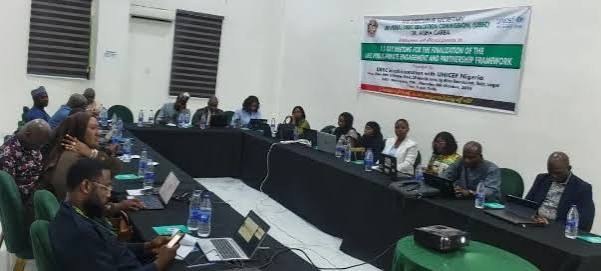
The development was announced on Wednesday in Ikeja, Lagos, during a two day meeting convened to review and finalise the Universal Basic Education Commission Public Private Engagement and Partnership Framework.
Abdulmumuni Abdulsalam, Acting Head of the Public Private Engagement and Partnership Unit at UBEC, said the framework would provide a structured approach for engaging private sector organisations, development partners and other non state actors in basic education delivery.
Abdulsalam, who was represented at the meeting by an official of the unit, Ebire Agada, said government alone could not address the scale of challenges confronting basic education.
He said the framework would help mobilise additional resources, expertise, innovation, technology and institutional capacity to complement government efforts in expanding access to quality and inclusive education.
According to him, effective partnerships could support improvements in school infrastructure, teaching and learning, institutional capacity, equity and inclusion.
Moving beyond ad hoc interventions
UBEC Executive Secretary, Dr. Aisha Garba, said the framework was being developed partly to address weaknesses in the commission’s previous approach to partnerships.
Garba said earlier partnerships had often been ad hoc, driven largely by goodwill without clear guidelines governing how private sector organisations, philanthropists, foundations and international partners could work with UBEC.
She said the new framework would establish clearer expectations for partners while strengthening accountability, transparency and compliance with the Universal Basic Education Act and UBEC’s 10 year roadmap.
The completed framework is expected to be submitted to the Minister of Education and the UBEC Board for approval and formal launch. Once approved, it will serve as the official guide for partnership initiatives involving UBEC and State Universal Basic Education Boards.
Garba said the initiative was particularly important because of persistent challenges including the large number of out of school children, infrastructure deficits, shortages of qualified teachers and pressure on public resources.
2,200 new schools targeted
As part of the proposed partnership models, UBEC is targeting the construction of more than 2,200 new schools under a Build a New School model.
Private sector participants are expected to finance construction, with each school estimated to cost between N134 million and N140 million. UBEC estimates that the model could benefit more than 900,000 learners.
Another proposed model, Adopt a School, would allow private sector organisations to renovate existing schools and support their maintenance. UBEC estimates renovation costs at about N40 million per school, with an additional estimated N2.96 million required for three years of maintenance.
More than 8,000 schools are targeted under the model, with UBEC estimating that more than 3.8 million learners could benefit.
The Fund an Initiative model would allow companies and other partners to support specific educational needs, including computers, laptops and internet connectivity for individual schools or groups of schools.
UBEC is also considering mechanisms for supporting private schools in communities where public schools are unavailable or located too far from residents. Under the proposed arrangement, private sector partners could fund education or support up to 50 learners in participating schools.
Partnerships to address education gaps
UBEC has previously engaged non governmental organisations, development partners, civil society organisations and organised private sector players to support basic education delivery. The commission’s existing public private partnership programme includes interventions in areas such as school infrastructure, teacher development and learning materials.
The new framework is intended to provide a more systematic structure for such interventions, including clearer partnership roles, accountability mechanisms and alignment with identified education priorities.
Stakeholders involved in developing the framework include the Federal Ministry of Education, UNICEF, the Universal Service Provision Fund, State Universal Basic Education Boards, civil society organisations, private sector representatives and other development partners.
The institutionalisation of public private partnerships could provide additional financing and technical capacity for Nigeria’s basic education system, particularly in communities facing infrastructure and access gaps. Its impact will depend on effective implementation, transparent partner selection, monitoring of interventions and sustained coordination between UBEC, state education authorities and private sector actors.









Leave a comment