


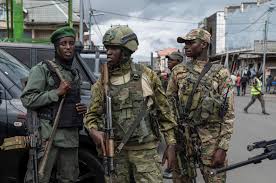
Nearly a year after Rwanda-backed M23 militants stormed the eastern Congolese city of Goma, the rebel group continues to hold the city, consolidating its control over key neighborhoods and strategic infrastructure. The scars from the January 2025 clashes between the Congolese army and M23 remain visible across the city, with many areas still bearing signs of structural damage, abandoned homes, and partially destroyed businesses. Despite the passage of time, the conflict’s legacy continues to shape daily life for residents.
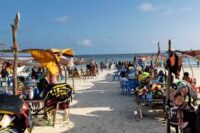
Life has gradually returned to a semblance of normalcy: markets are functioning, schools are partially open, and some public services have resumed. Residents have adapted to new realities, establishing informal economies and relying on community networks for support. Yet, there is no true economic recovery. The closure of banks, followed by the shutdown of Goma’s international airport, has severely hampered trade, investment, and mobility, plunging thousands of households into poverty. Many small businesses that once served the city’s population are struggling to reopen, while farmers and traders face disrupted supply chains and restricted access to regional markets.
Humanitarian organizations warn that the situation remains precarious. While the immediate threat of large-scale fighting has diminished, insecurity persists in surrounding areas, limiting freedom of movement and access to essential services such as healthcare and clean water. Displacement continues to affect tens of thousands, and many families are dependent on aid for survival.
The Congolese government continues to accuse Rwanda of backing the M23, a claim Kigali denies, while M23 maintains it is acting independently to push for reforms and the implementation of past peace agreements. Civilians remain caught in the middle, facing an uncertain future as the city remains under firm rebel control.
Goma’s slow return to normalcy illustrates the wider challenges facing the eastern Democratic Republic of the Congo. While some semblance of daily life persists, including functioning markets and adaptive community networks, the broader economic, political, and security landscape remains fragile. Long-term stability, development, and the restoration of state authority continue to be elusive, leaving residents in a liminal state between survival and recovery.









Leave a comment