


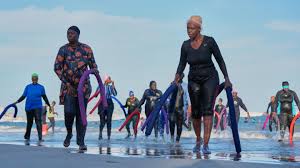
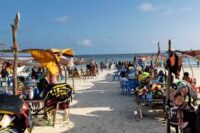
Before the sun rises over Senegal’s capital, Dakar, a group of about 100 people in swimsuits and life jackets gather on the sand, ready for their morning aquagym class. The Atlantic waters are chilly, but participants are undeterred, eager to start their routine that combines physical exercise with therapeutic benefits.
Among them is 63-year-old Aminata Sall, who moves in rhythm with the others, foam noodles tucked under her arms as she kicks through the water. On the beach itself, people with limited mobility participate in gentle therapy sessions, buried knee-deep in sand and rotating their torsos to ease joint pain and improve flexibility.
Sall’s doctor once warned her that her rheumatoid arthritis—a debilitating autoimmune disease that inflames and damages joints—could cause her to lose the ability to walk within five years if left untreated. “The shock was enormous,” she said. “I stayed at home for almost a year, doing nothing.”
Her life began to change one morning when she wandered down to a beach in Dakar’s Ngor neighborhood and saw others exercising in the water. The sessions have provided not only physical relief but also a sense of community and motivation. Participants report improvements in mobility, decreased pain, and a renewed confidence in managing their conditions.
The popularity of aquagym and sand-based therapy in Dakar reflects a growing interest in low-impact, accessible exercises that combine health, social engagement, and the natural environment. For many Senegalese residents, it’s more than fitness—it’s a lifeline for maintaining independence, managing chronic conditions, and reclaiming a sense of normalcy and joy in daily life.








Leave a comment