


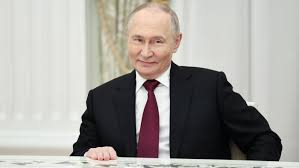
United States special envoy Steve Witkoff has said he and President Donald Trump’s son in law, Jared Kushner, will meet Russian President Vladimir Putin in Moscow on Thursday as part of renewed efforts to broker an end to the war in Ukraine.
Speaking to reporters on the sidelines of the World Economic Forum in Davos, Switzerland, Witkoff said the talks are intended to push negotiations over the finish line after months of behind the scenes diplomacy. He confirmed that discussions will also be held with Ukrainian officials, underscoring Washington’s attempt to engage both sides simultaneously.
“I’m hopeful that all meetings will go well on that subject. We need a peace,” Witkoff said, adding that the human and economic costs of the conflict make a negotiated settlement increasingly urgent.
According to the US envoy, negotiators are close to resolving what he described as the final “10 percent” of a deal to end Russia’s nearly four year long war in Ukraine. While he did not disclose specific details, Witkoff suggested that the broad contours of an agreement are already in place and that remaining issues are difficult but not insurmountable.
Ukrainian authorities have acknowledged progress in the talks but maintain that several critical matters remain unresolved. Chief among them is the issue of territory, particularly areas occupied by Russian forces since the start of the invasion. Kyiv has also stressed the importance of firm post war security guarantees from its allies, arguing that such assurances are essential to prevent Moscow from launching a renewed assault in the future.
The talks come at a time of heightened pressure on Ukraine, as Russia continues to target the country’s energy infrastructure. Strikes on power plants and transmission networks have intensified during the winter period, causing widespread outages and increasing hardship for civilians. Ukrainian officials say the attacks are designed to weaken morale and bargaining power as negotiations progress.
Washington has in recent months stepped up diplomatic efforts to end what is widely regarded as Europe’s deadliest conflict since World War II. The war has killed tens of thousands, displaced millions, and reshaped global security dynamics, while also contributing to higher energy and food prices worldwide.
Although optimism has grown in some diplomatic circles, significant skepticism remains over whether a lasting peace can be achieved. Analysts note that any agreement will require difficult compromises and robust enforcement mechanisms to ensure compliance by both sides.
For now, the upcoming meetings in Moscow are being closely watched as a potentially decisive moment in the long running conflict, with the prospect that sustained diplomacy could finally bring an end to a war that has reshaped Europe and strained international relations for nearly four years.









Leave a comment