


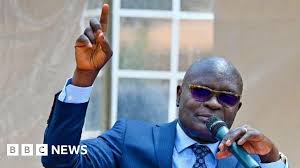
Uganda is gearing up for a high-stakes presidential election, with President Yoweri Museveni, 81, seeking a seventh term in office. Museveni has ruled the East African nation for nearly four decades, and his main challenger, Bobi Wine, the 43-year-old pop star turned politician, is aiming to unseat him for the second time after finishing runner-up in the 2021 polls. Six other candidates are also contesting, with around 21.6 million registered voters expected to cast ballots.
Campaigning has been turbulent, marked by the disruption of opposition activities, the detention of activists, and the breaking-up of rallies by police. Despite this tense environment, Simon Byabakama, the head of Uganda’s Electoral Commission, maintained that he would follow the law rather than yield to intimidation. Speaking at the commission’s headquarters in Kampala, Byabakama said he had received threats over the results declaration but dismissed them as coming from “idle people.”
“You can see from my demeanour that fear is a word that does not exist in my vocabulary,” Byabakama said. “It is the voters who determine how many votes a candidate gets. What the voters have said is what I will declare to the nation.” He emphasized that Uganda’s law requires the president to be elected with more than 50% plus one of the valid votes cast, and that he would declare results within 48 hours of the close of polling.
Concerns have been raised over the heavy military presence in some areas and the location of polling stations on military premises. Byabakama reassured citizens that security forces were deployed to maintain peace, not intimidate voters, and promised investigations into any irregularities.
Tensions escalated further on Tuesday when authorities cut internet access and limited mobile services, citing the need to curb misinformation, disinformation, electoral fraud, and related risks. The network outage has drawn criticism and heightened concerns about repression in the run-up to the vote.
Amid the uncertainty, Byabakama remains firm that threats and political pressure will not influence his role. Uganda now waits to see if the election will proceed peacefully and whether voters’ voices will determine the country’s political future.





Leave a comment