


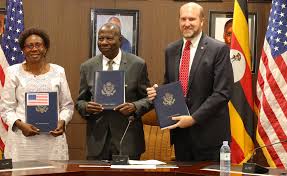
Uganda and the United States have signed a two point three billion dollar bilateral health cooperation agreement that is set to reshape health investments and long term capacity building in the country. Announced on Wednesday, the agreement is a central component of the America First Global Health Strategy, an approach that urges partner nations to progressively transition from external aid to nationally driven health financing and system resilience.
The Memorandum of Understanding outlines that Uganda will receive up to one point seven billion dollars over the next five years to support core public health priorities. These funds will target the prevention and treatment of HIV and AIDS, tuberculosis and malaria, while also strengthening disease surveillance, workforce development and the broader health infrastructure. The United States emphasized that these investments are intended to help Uganda establish a system capable of managing both existing and emerging health threats with greater autonomy.
In return, the Government of Uganda has committed to increasing its own health sector expenditure by more than five hundred million dollars within the same period. This commitment reflects a shared goal of gradually shifting financial responsibility from donors to national systems, ensuring that gains in public health are both sustainable and locally anchored. According to the joint statement released by both nations, the framework is designed to support Uganda in building a resilient health system that contributes to global security through improved outbreak preparedness and response capacity.
Uganda becomes the latest African nation to sign such an agreement with the Trump administration following similar arrangements with Kenya and Rwanda. These agreements come at a time when the United States has restructured its global health engagement, reduced elements of its foreign aid portfolio and closed the United States Agency for International Development. The new approach concentrates on targeted bilateral commitments that require partner countries to progressively take ownership of their health systems.
For Uganda, the agreement represents both a financial opportunity and a policy challenge. The additional resources will accelerate critical health programmes and address persistent gaps, but the increased domestic financial obligation signals a new phase of accountability and investment for the country’s leadership. As the framework takes effect, both governments have positioned it as a partnership that will yield long term benefits for public health outcomes and support the global fight against infectious diseases.
If you want this expanded further, adjusted to a different tone or adapted for another publication style, I can revise it.












Leave a comment