


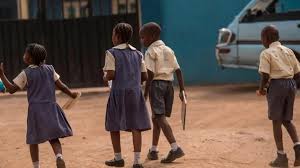
Africa’s latest education debate is no longer about budgets, access, or digital transformation. Instead, it revolves around language, with two West African giants, Nigeria and Ghana, taking sharply contrasting approaches to the question of what language children should be taught in schools.
On Wednesday, November 12, Nigeria officially reversed its mother-tongue education policy, returning to English-only instruction from pre-primary through secondary school. Education Minister emphasized that the policy shift was based on evidence suggesting that students perform better academically when taught in English, particularly in a global context where English proficiency is seen as essential for higher education and international competitiveness.
Meanwhile, Ghana continues to implement compulsory mother-tongue instruction from Kindergarten to Primary 3. In this approach, children are taught in their local languages during the earliest years of schooling before gradually transitioning to English as the primary medium of instruction. Ghanaian authorities argue that early literacy in a child’s native language strengthens cognitive development, preserves cultural heritage, and ultimately improves long-term learning outcomes.
The contrasting policies have sparked debate among educators, policymakers, and parents in West Africa. Proponents of mother-tongue instruction highlight research showing that children learn to read and write faster when first taught in a familiar language, allowing them to build a strong foundation before mastering additional languages. Critics, however, warn that limiting early instruction to local languages may disadvantage students in higher education and global employment markets where English predominates.
Nigeria’s decision to return to English instruction has been described by some observers as a pragmatic response to the demands of globalization and the need for standardized assessment across a linguistically diverse population. Ghana’s policy, by contrast, is seen as an effort to balance educational development with cultural preservation and inclusive access to literacy for speakers of multiple indigenous languages.
The divide raises broader questions about the role of language in education across Africa. Should schools prioritize global competitiveness and fluency in international languages, or should they focus on nurturing foundational literacy in local languages, even if it means a delayed introduction to widely spoken languages like English or French?
For now, Nigeria and Ghana exemplify two divergent paths, offering a natural experiment in educational policy. Policymakers, educators, and researchers will be watching closely to see which approach delivers the best outcomes in terms of literacy, cognitive development, and long-term academic success.
The debate underscores the complexity of education policy in multilingual societies and highlights that in some cases, the choice of language may matter more than funding, infrastructure, or technology when it comes to shaping young learners’ futures.












Leave a comment