


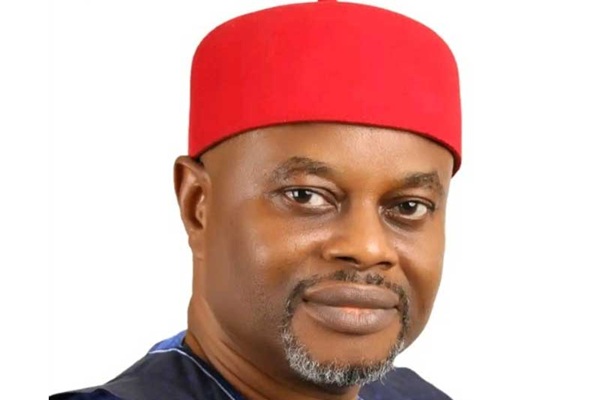
Nigeria’s Minister of Innovation, Science and Technology, Uche Nnaji, has resigned from office following mounting allegations that he forged his academic credentials. This controversy has shaken the government of President Bola Tinubu and renewed public debate about integrity in public office.
The resignation came just days after an explosive investigation by the Premium Times alleged that Nnaji had submitted falsified academic documents as part of his ministerial screening process in 2023. The report claimed that the minister’s academic and National Youth Service Corps (NYSC) certificates could not be verified, raising serious concerns about the vetting process for federal appointees.
Confirming the resignation, presidential spokesperson Bayo Onanuga announced on X (formerly Twitter) late Tuesday that Nnaji had tendered his resignation letter, citing “blackmail by political opponents” as the reason for his decision. “The minister stated that he has been the target of political witch-hunts aimed at tarnishing his reputation,” Onanuga wrote.
However, the allegations appear to have gained traction after the University of Nigeria, Nsukka (UNN)—which Nnaji claimed to have attended—reportedly told investigators that there were no records showing he graduated in 1985 with a Bachelor’s degree in Microbiology/Biochemistry as he had claimed. According to a senior university official, while Nnaji was admitted in 1981, he never completed his studies and did not receive a degree.
Compounding the controversy, the National Youth Service Corps (NYSC), responsible for verifying national service credentials, also stated that the NYSC certificate submitted by Nnaji during his appointment process “could not be authenticated.”
Nnaji, in his defense, has vehemently denied the accusations, insisting that his academic and service records are genuine and that he is the victim of a smear campaign orchestrated by rivals seeking to undermine his career. “My conscience is clear. I earned my degree, and I served my country,” he said in a statement before his resignation became official.
The scandal has provoked widespread outrage among Nigerians, many of whom view it as another blow to the credibility of the Tinubu administration. Civil society groups and opposition figures have called for a full-scale investigation into the matter to ensure accountability and transparency.
Former Vice President Atiku Abubakar, a leading opposition figure, was among the first to react, demanding that the government launch an independent probe into the case. “Nnaji should have been summarily dismissed and prosecuted for deceit and falsification,” Atiku posted on X. “Nigerians deserve to know the truth about those who preside over their lives and resources.”
The episode also highlights the broader issue of academic and credential fraud among public officials in Nigeria—an issue that has repeatedly drawn public concern. It is not the first time a senior official has faced allegations of falsified documents, but Nnaji’s resignation marks one of the rare occasions where such a scandal has resulted in a cabinet exit.
Nnaji becomes only the second minister to leave President Tinubu’s cabinet since the administration took office in May 2023. Earlier in January, Betta Edu, the Minister of Humanitarian Affairs and Poverty Alleviation, was suspended amid a corruption scandal involving the alleged diversion of public funds.
Observers note that Nnaji’s departure could further strain public trust in government institutions, especially at a time when Nigeria faces mounting economic challenges and growing discontent over governance and accountability.
The presidency has yet to name a replacement, but political analysts say Tinubu will likely seek to restore public confidence by appointing a qualified successor and ensuring greater transparency in future vetting processes.
As the investigation unfolds, Nnaji’s resignation adds another chapter to Nigeria’s long-running struggles with public sector accountability, a reminder of the urgent need for reforms to ensure that those entrusted with public office uphold the highest standards of honesty and integrity.







Leave a comment