


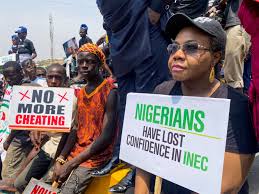
Nigeria’s road to the 2027 general elections has been thrown into early controversy as opposition parties and civil society raise concerns over the integrity of the latest voter registration figures released by the Independent National Electoral Commission (INEC). The figures, which form the foundation of the electoral process, have been described by critics as “statistically implausible,” with particular focus on the unusually high registration numbers recorded in Osun State. The controversy underscores growing doubts about whether Nigeria’s multi-billion-naira investments in electoral technology are truly capable of delivering free, fair, and credible elections.
According to data released by INEC, Osun State alone accounted for 393,269 pre-registrations out of the 1,379,342 national online registrations recorded in just the first week of continuous voter registration. This figure has raised eyebrows, as it surpasses the total number of new voters added in Osun across the entire 2019–2023 electoral cycle, which stood at 275,815. Critics argue that the sheer volume of new sign-ups in such a short period is unrealistic and potentially indicative of deeper irregularities. Bolaji Abdullahi, national publicity secretary of the African Democratic Congress (ADC), warned that if the voter register is compromised, the entire legitimacy of the electoral process will be called into question.
Professor Chidi Odinkalu of the Fletcher School of Law and Diplomacy added weight to the criticism, noting that Nigeria’s problem is not technology itself but the absence of values, systems, institutions, and accountability that ensure transparency. According to him, “technology solutions assume the existence of values, systems, people and institutions. In Nigeria, it is these four that are the issue, and they cannot be solved by technology.” His remarks echo a broader frustration about how INEC has handled past elections, where expensive technology has been deployed yet failed to prevent irregularities or build trust among voters.
INEC, however, has defended its figures, pointing to historical precedents. The commission argues that Osun State has often led in voter registration, citing 2021 figures where it recorded 708,782 registrants out of a national total of 8,271,647. Officials stress that every online registrant must complete their registration at a physical center, where biometrics are captured, making manipulation difficult. Despite this defense, many opposition voices remain unconvinced, pointing to patterns of electoral malpractice and judicial reluctance to hold the commission accountable.
The debate around voter registration is tied to a larger history of Nigeria’s struggles with electoral credibility. The 2023 elections, which cost more than any in the country’s history, showcased this paradox. INEC deployed the bimodal voter accreditation system (BVAS), which cost over N105.2 billion, alongside the Election Results Viewing Portal (IReV), both meant to enhance transparency. Yet, instead of inspiring confidence, these technologies were marred by glitches, delays, and allegations of manipulation. For instance, while polling unit results were uploaded to BVAS, critics allege that INEC announced figures inconsistent with those results. Similarly, IReV uploads were plagued by illegible scans, photos of random objects, and widespread logistical failures, such as missing or delayed voting materials.
Former President Goodluck Jonathan has also weighed in on the dangers of over-reliance on technology without political will. Reflecting on his own 2015 re-election bid, Jonathan recalled how his voter card was rejected four times by INEC’s card readers, forcing him to vote manually. He argued that countries like Nigeria and Sierra Leone, which have adopted more electoral technologies, ironically face greater agitations, legal disputes, and political instability. In his words, “The deployment of technology, no matter how elaborate or sophisticated, may not deliver the desired outcomes without the proven will of the authorities and the citizens to do the right thing.”
Experts like Cynthia Mbamalu of Yiaga Africa agree that while technology is crucial for modern elections, its impact depends on how it is implemented and whether authorities genuinely respect democratic processes. She cautioned that while elections are inherently expensive, the costs are only justified if they lead to greater credibility and trust, not disappointment and doubt. Political economy analyst Uche Igwe echoed this sentiment, stressing that Nigeria’s cycle of pouring billions into technology without corresponding improvements has turned elections into an expensive exercise in futility.
As Nigeria moves closer to 2027, the battle over the voter register is likely to intensify, especially as opposition parties demand a forensic audit of INEC’s data. For many Nigerians, the controversy is a reminder that technology alone cannot cure systemic failures rooted in weak institutions, compromised courts, and entrenched political impunity. Unless these deeper issues are addressed, the voter register and by extension, the 2027 elections may once again be tainted by doubts over legitimacy, transparency, and fairness.










Leave a comment