


Attacks on Africa’s critical infrastructure have become an alarming reality in recent years, with devastating consequences for national economies and the continent’s overall development. In 2025 alone, insurgent militant groups forced the temporary shutdown of a major tin mine in the Democratic Republic of Congo, while fighting in Sudan’s civil war sparked a massive blaze at the country’s largest oil refinery. These incidents underscore how vulnerable Africa’s essential industries are to conflict and sabotage, and how such disruptions can ripple far beyond national borders to affect the entire continent.
Experts warn that these assaults go beyond immediate destruction. They not only undermine local economic stability but also discourage the foreign investment that Africa’s large-scale infrastructure projects heavily depend on. “These are critical attacks carried out on strategic infrastructure which directly impact on economic development,” explained Oluwole Ojewale, regional coordinator for Central Africa at the Institute for Security Studies, in an interview with CNN. He pointed to Nigeria as a stark example, where repeated terrorist attacks on oil pipelines have been a key reason the country struggles to meet its production quotas, costing billions in lost revenue and threatening long-term growth.
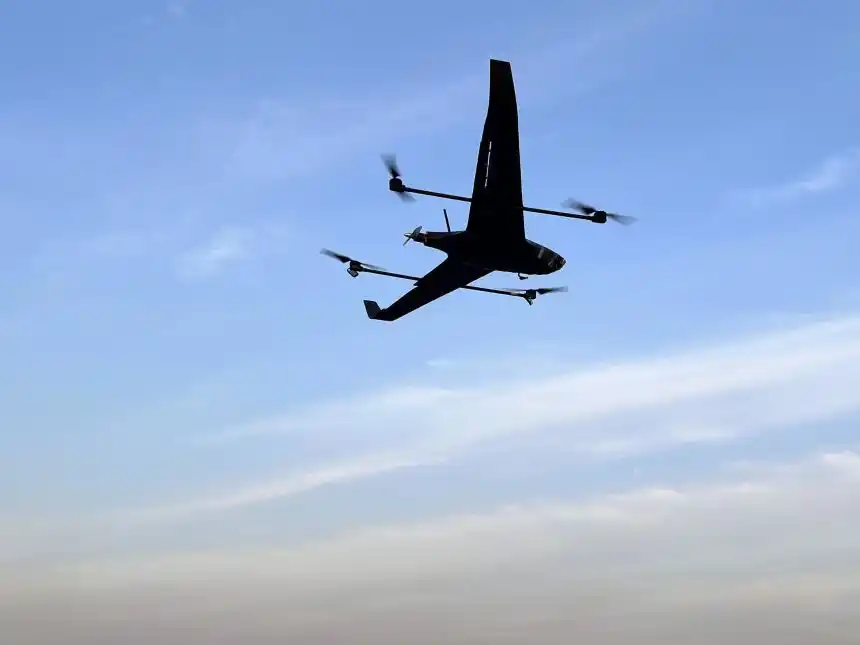
In response, both governments and private enterprises across the continent are rethinking their approach to security. Traditional methods alone are proving inadequate, and there is now a shift toward high-tech solutions, with artificial intelligence and autonomous systems at the forefront. Robotics, AI-powered drones, and automated surveillance tools are being developed to monitor, detect, and neutralize threats before they cause catastrophic damage.
Leading this innovation is Terra Industries (formerly Terrahaptix), a fast-rising robotics and manufacturing startup based in Abuja, Nigeria. Founded in 2024 by two young Nigerian visionaries, 23-year-old Maxwell Maduka and 22-year-old Nathan Nwachuku, Terra Industries is pioneering autonomous security systems designed to safeguard Africa’s most vital sectors. Their technology integrates AI with drone systems capable of detecting threats in real time, providing a proactive shield for industries like energy, mining, telecommunications, and agriculture.
The emergence of such homegrown technology could prove transformative. By protecting vital pipelines, refineries, mines, and telecom facilities, these innovations not only strengthen Africa’s resilience against insurgent groups but also restore investor confidence in the continent’s infrastructure development. As African nations continue to battle instability and insurgency, the role of AI-driven autonomous security systems may become a cornerstone of sustainable economic progress and long-term national security.











Leave a comment