


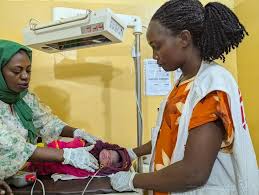
In May, a heavily pregnant Sudanese woman, identified as Amira for her safety, risked everything to escape the brutal conflict consuming Sudan’s Kordofan region. At seven months pregnant, Amira fled her home in En Nahud, West Kordofan, after the paramilitary Rapid Support Forces (RSF) seized the city. With hospitals destroyed, pharmacies shuttered, and transport scarce, she felt she had no choice but to attempt the perilous journey despite the risks.
Her story, documented in an audio diary shared with the BBC by the global advocacy group Avaaz, sheds light on the devastating realities faced by civilians caught between the Sudanese military and the RSF. More than two years into the war, Kordofan has become one of the fiercest battlegrounds, its oil fields and transport routes making it a strategic prize for both sides.
Amira and her husband’s escape was fraught with danger from the outset. The truck they boarded was controlled by RSF fighters, and a confrontation nearly turned deadly when the driver armed, drunk, and high on marijuana—threatened a passenger with his gun. With 70 to 80 people crammed into the vehicle, including mothers desperately trying to protect their children, panic and fear were constant companions.
The family’s journey to el-Fula, the state capital, was marked by repeated breakdowns, violent intimidation, and extortion at RSF checkpoints. Amira described how the drivers set arbitrary prices, often forcing passengers to pay several times over, while food and water along the route became prohibitively expensive. “The drivers decided who rode, where they sat, and how much they paid. We had no choice. They were armed, and violence came easily to them,” she recalled.
The dangers extended beyond the RSF. In el-Fula, Amira feared the advancing Sudanese army, which, according to credible UN reports, has been accused of targeting civilians from ethnic groups thought to be sympathetic to the RSF, such as the Baggara and Rizeigat. Amira’s husband belonged to one of those groups, even though he was a law graduate and public sector worker with no ties to the paramilitary forces. “Right now, that doesn’t matter. People are being targeted just because of their ethnicity,” she explained.
Despite international condemnation, both the Sudanese army and RSF continue to be accused of human rights abuses, including extrajudicial killings, torture, and forced displacement. Earlier this year, army chief General Abdel Fattah al-Burhan pledged investigations into violations, but rights groups argue impunity remains rampant.
The war’s expansion into Kordofan has intensified an already dire humanitarian crisis. With additional militias such as the SPLM-N joining the conflict, aid delivery has become nearly impossible. Thousands of families remain trapped, with reports of widespread hunger, scarce medical care, and escalating violence.
Amira’s ordeal took three days of constant travel, switching vehicles multiple times before she finally crossed into South Sudan and continued onward to Uganda, where she now awaits the birth of her child in Kampala. Her story is just one among countless untold narratives of displacement, fear, and survival that define the lives of millions of Sudanese civilians.
As the war drags on, international humanitarian agencies warn that Sudan is spiraling toward collapse, with mass famine, worsening ethnic violence, and millions more at risk of displacement. Amira’s journey is both a testament to resilience and a haunting reminder of the human cost of Sudan’s civil war.









Leave a comment