


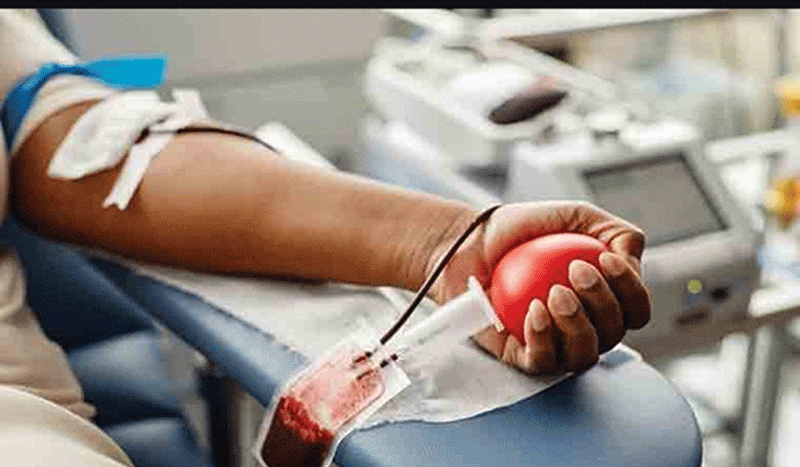
In Zimbabwe, where public healthcare is plagued by shortages and underfunding, accessing emergency medical services often depends not on urgency but on affordability. Lloyd Muzamba, a 35-year-old hardware store worker in Bulawayo, knows this reality all too well.
In 2023, he was involved in a serious car accident along the Harare–Bulawayo highway. When he arrived at Mpilo Central Hospital, one of the largest government-run hospitals in the country, he needed an immediate blood transfusion. But like many public hospitals across Zimbabwe, Mpilo had run out of blood.
Despite government policy stating that blood should be free in public facilities, availability is another matter. Muzamba’s family had no choice but to approach a nearby private hospital. There, three pints of blood were available each costing $250. The total bill of $750 was impossible for Muzamba, who earned less than $300 a month and had no savings. In desperation, his uncle sold a cow to raise part of the money, while other relatives contributed the rest.
Although the transfusion saved his life, the experience left a deep emotional toll. “It’s frightening to think what could have happened if we hadn’t managed to find the money,” he said. “I still worry what if it happens again?”
Muzamba’s story is far from unique. Across Zimbabwe, many families are forced to make impossible financial decisions just to access critical care. Inflation, currency instability, and persistent poverty have placed enormous strain on the healthcare system. While medical supplies like blood are officially free, the reality is that stockouts are common, and the costs shift to patients when public systems fail.
This ongoing crisis has led to a rise in medical migration, with some Zimbabweans crossing into neighboring countries like Zambia for cheaper treatment. As hospitals struggle to keep up with demand, the burden continues to fall on ordinary citizens, many of whom are already struggling to make ends meet.
The situation underscores a growing public health emergency in Zimbabwe, where economic hardship and systemic breakdowns are making essential healthcare inaccessible for the majority. Without significant investment and reform, more lives may be lost not because of illness or injury, but because help came at a price they couldn’t afford.






Leave a comment