



Stakeholders in Nigeria’s mining industry have called for stronger security, improved coordination among government agencies and clearer regulations to attract investment and unlock the country’s estimated $700 billion solid minerals potential.
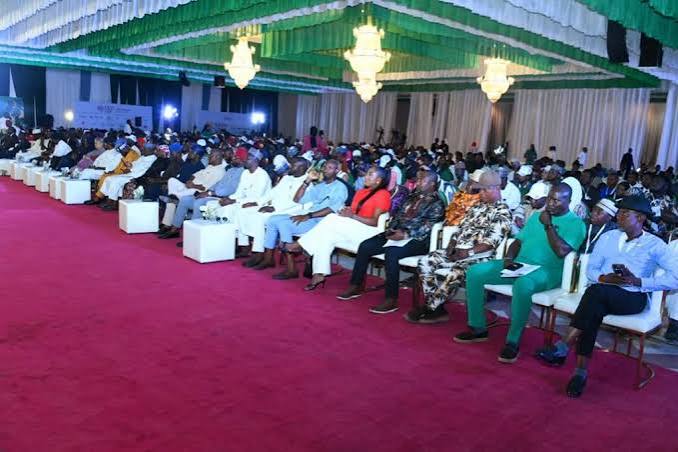
The call was made on Tuesday at the opening of the 11th Nigeria Mining Week in Abuja, where government officials, mining operators, investors and international partners discussed strategies to develop commercially viable projects and expand the sector’s contribution to economic diversification, employment and government revenue.
Participants identified insecurity along mining corridors, conflicting regulatory requirements, infrastructure deficits and limited access to financing as major obstacles to investment in the industry.
The President of the Miners Association of Nigeria, Oba Ayandele Ayanleke, said stronger collaboration between local and international stakeholders could facilitate the exchange of technology, expertise and capital needed to expand mining operations.
He also called for clearer rules governing relations between federal and state authorities, warning that regulatory uncertainty could undermine investor confidence and make it difficult for operators to plan projects and assess costs.
Austin Menegbo, Country Manager of Segilola Resources Operating Ltd., said Nigeria needed a comprehensive approach to tackling illegal mining, combining law enforcement with formalisation, safety training, access to finance and alternative livelihoods.
Speaking at the event, Menegbo called for stronger coordination among ministries, departments and agencies to address overlapping regulatory requirements and conflicting directives that create uncertainty for mining operators.
He said alternative livelihoods were particularly important in communities where mining could not be conducted safely or legally.
Menegbo also urged Nigeria to build on the experience of the Segilola gold mine, which produced 91,910 ounces of gold in 2025. Nigerians accounted for 99 per cent of its workforce, according to figures he presented.
He said the country needed a pipeline of credible projects capable of progressing from mineral discoveries to operational mines that generate sustained economic benefits for investors and host communities.
The Head of Mission of the Swedish Embassy in Nigeria, Ambassador Anna Westerholm, called for partnerships that prioritise local mineral processing, workers’ safety, community welfare and transparency.
Westerholm said Nigeria could benefit from Sweden’s experience in mining technology, automation, skills development and responsible mineral production.
She also emphasised the growing importance of mineral traceability, which enables buyers and regulators to establish where minerals originate and the conditions under which they are extracted. Stronger traceability, she said, could improve Nigeria’s competitiveness in international markets.
The emphasis on local processing reflects broader efforts to increase the economic value retained within Nigeria rather than relying predominantly on exports of unprocessed minerals.
Developing domestic processing capacity could create jobs, expand industrial activity and strengthen links between mining and manufacturing, although achieving these benefits would require reliable electricity, transport infrastructure, skilled workers and long-term financing.
Cyril Azobu, PwC Nigeria’s Partner and Mining Industry Leader, said Nigeria needed to convert its mineral potential and growing international interest into commercially viable projects.
He called for a predictable investment environment and partnerships connecting domestic opportunities with international capital, technology and expertise.
Azobu also urged the country to move beyond raw mineral exports by investing in processing and value addition. PwC Nigeria, he said, remained committed to supporting industry development through technical expertise, regulatory guidance and engagement with stakeholders.
The 11th Nigeria Mining Week is being held under the theme, “Unlocking Investment and Growth through Partnerships.”
The stakeholders’ recommendations come as Nigeria seeks to diversify its economy beyond oil and expand the contribution of solid minerals to employment, industrial development and public revenue.
However, translating the country’s mineral resources into sustained economic growth will require more than attracting investors. Clear licensing procedures, effective enforcement against illegal operations, improved infrastructure and constructive engagement with host communities will also be essential.
A coordinated approach involving government agencies, mining companies, financiers, traditional institutions and local communities could help reduce operational risks while ensuring that mineral development delivers economic benefits without compromising workers’ safety or environmental protection.
The challenge for policymakers is to create conditions in which responsible mining projects can secure investment, operate predictably and contribute to long-term development across mineral-producing communities.










Leave a comment