


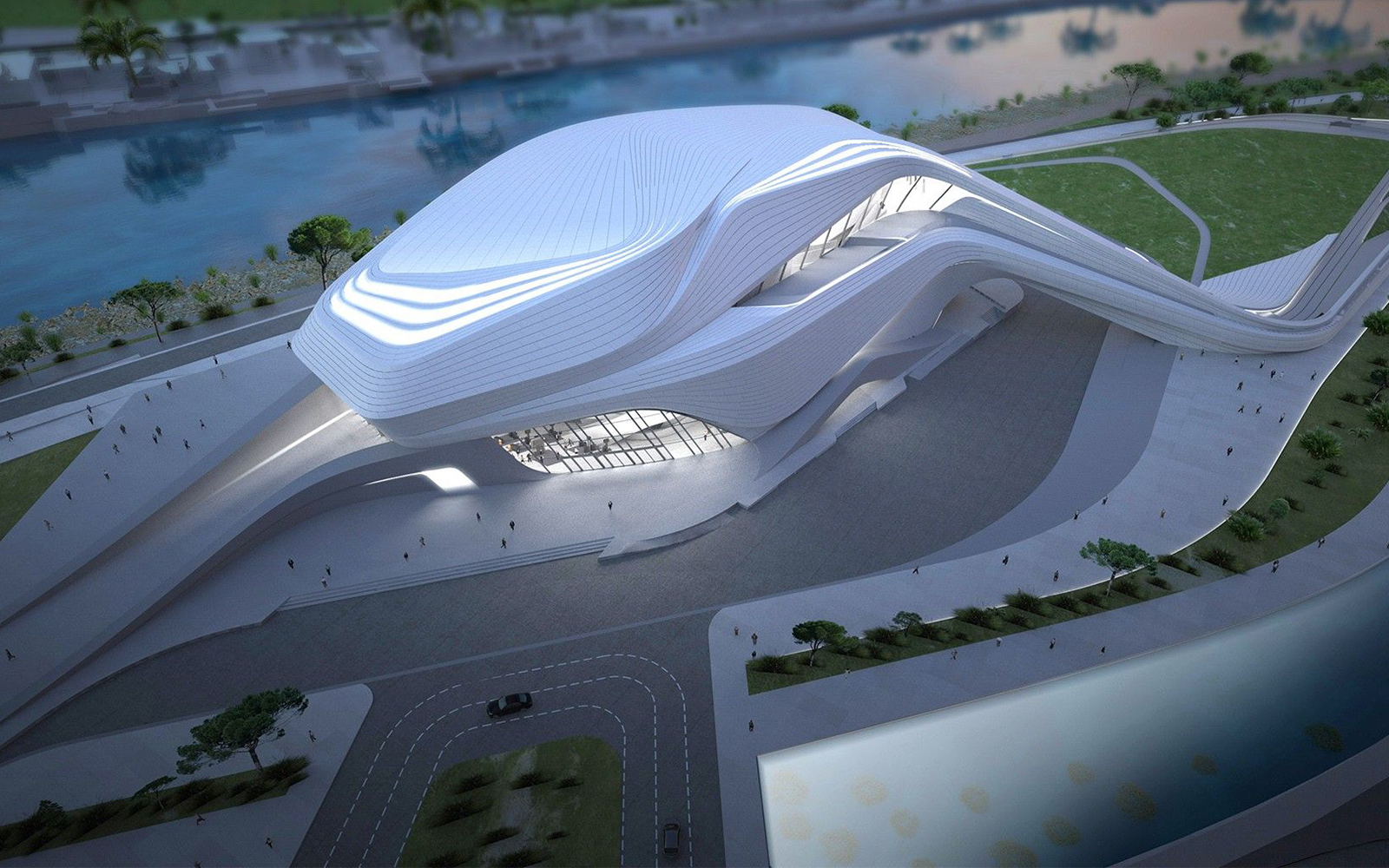
Rabat Grand Theater stands as an architectural marvel that has yet to fulfill its promise to the people—a promise of cultural grandeur and artistic expression. The Grand Theater of Rabat, Africa’s largest, was completed in 2021 and designed by the world-renowned architect Zaha Hadid. Yet, despite its imposing presence on the banks of the Bouregreg River, the theater remains closed to the public, shrouded in mystery and unanswered questions.
The structure itself is a sight to behold, a futuristic creation with a striking white, curved exterior that commands attention. Its design has become a symbol of Morocco’s ambition to blend modernity with tradition. Tourists marvel at its 25,000 square meter expanse, calling it “impressive” and a true work of art. Residents of Rabat and the neighboring city of Salé see it as a new emblem of their city—a contemporary counterpart to the ancient Hassan Tower, a relic of an 800-year-old mosque that stands nearby.
The theater’s significance goes beyond just its physical beauty. It has already made its way into the country’s national consciousness, featured on Morocco’s new 20-dirham banknote as a symbol of the nation’s “rich socio-cultural development.” The central bank’s decision to place the theater on its currency speaks volumes about its importance to Morocco’s identity and the role it is meant to play in the cultural landscape of the country. Yet, despite its symbolic status, the doors of the theater remain firmly shut.
Rabat’s grand theater, described by the Moroccan press as “the biggest in Africa,” boasts an 1,800-seat auditorium that was expected to host world-class performances, attracting visitors from across the globe. However, since its completion, the theater has not seen a single audience. What was meant to be a cultural hub for the country and the continent has instead become a source of speculation, with each year bringing new rumors about its potential opening.
The delay in opening the theater has become a subject of endless debate in the Moroccan media. Initially, it was thought that the theater would open in late 2021, following delays caused by the COVID-19 pandemic. When that failed to happen, 2022 was floated as the new opening date, only for the public to be disappointed once again. Predictions then shifted to 2023, but the year passed without the much-anticipated grand opening. Now, as 2024 unfolds, many are left wondering if this will finally be the year the theater welcomes its first visitors.
The uncertainty surrounding the theater’s opening is compounded by the fact that it is a “royal initiative,” personally overseen by King Mohammed VI. According to sources, the project was handpicked by the King, who selected Zaha Hadid, the first woman to win the prestigious Pritzker Prize, to design the building. Hadid, a trailblazing Anglo-Iraqi architect, passed away in 2016, making the theater in Rabat one of her final designs. The project holds special significance, not only because of its grandeur but also because of the King’s direct involvement.
However, despite the royal endorsement, little information has been provided about when the theater will open. Even municipal officials are reportedly kept in the dark, with some refusing to comment and others speaking only under the condition of anonymity. The sensitive nature of the issue has left many frustrated, as the theater—meant to be a beacon of cultural pride for Morocco—remains out of reach for its citizens.
As the people of Rabat continue to wait for the grand theater to open its doors, the building stands as both a symbol of Morocco’s cultural aspirations and a reminder of the complexities that often accompany large-scale projects in the region. Whether 2024 will be the year that this iconic theater finally fulfills its promise remains to be seen, but one thing is certain: the anticipation surrounding it continues to grow.
For now, the Grand Theater of Rabat remains closed, a silent monument to Morocco’s future potential, waiting for the day it can take its place as Africa’s premier cultural venue.








Leave a comment