


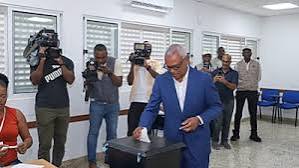
President José Maria Neves has won a second five-year term after securing 63.8 per cent of the vote in Sunday’s presidential election, according to provisional results from the country’s electoral commission.
Results from 97 per cent of polling stations showed Neves defeating five challengers, including former Justice Minister Joana Rosa Amado, who received 31.6 per cent.
Rosa, the country’s first female presidential candidate, conceded defeat and said she had congratulated the incumbent.
Neves, 66, described his re-election as a victory for the country and pledged to serve all Cape Verdeans, regardless of their political affiliations.
In his victory remarks, he promised to build cross-party cooperation and pursue improvements in housing, healthcare and education, while creating jobs and addressing poverty.
The result gives Neves another five-year mandate after his first election in 2021. He previously served as prime minister from 2001 to 2016 and remains a prominent figure in the African Party for the Independence of Cape Verde (PAICV).
The election was contested by six candidates and attracted attention because of Rosa’s historic bid to become the country’s first woman president since independence from Portugal in 1975.
Her campaign focused on corruption, political interference and the need to create better opportunities for young people, while Neves campaigned on experience, national unity and continuity.
Turnout was low, with only 31.7 per cent of approximately 418,000 registered voters casting ballots, according to provisional figures.
Neves attributed the low participation partly to emigration, population movements within the country and outdated voter registers. He pledged to commission a study into the issue.
The election took place amid public concerns about unemployment, rising living costs and the continued departure of young Cape Verdeans seeking opportunities abroad.
Cape Verde, an Atlantic archipelago of about 500,000 people located off the coast of West Africa, is widely regarded as one of the continent’s more politically stable democracies.
Under its political system, the prime minister heads the government and exercises most executive authority, while the president serves as head of state with constitutional responsibilities, including the power to veto legislation.
Neves’ victory means he will continue in office as the country navigates economic pressures, youth unemployment and demands for improved public services.











Leave a comment