


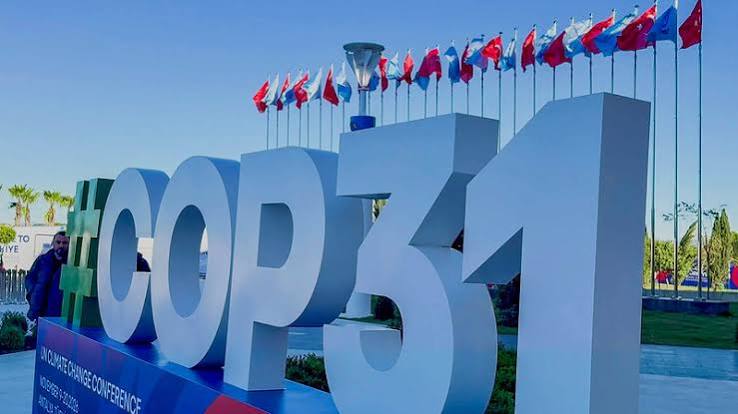
Climate activists and campaigners have called on wealthy nations to increase financial support for Africa and other climate-vulnerable regions, demanding grant-based funding rather than loans to help communities respond to the effects of climate change.
The demand featured prominently during protests at the 31st United Nations Climate Change Conference (COP31) in Antalya, Turkey, on Nov. 10, as campaigners challenged governments to turn climate finance commitments into resources that reach vulnerable communities.
The demonstration, held in the conference’s Blue Zone, was supported by the Climate Action Network (CAN) and the Asia Pacific Movement on Debt and Development. It was organised by Gambian activist Baboucarr Nyang, regional coordinator of CAN Africa.
Campaigners argued that developing countries should not be forced to borrow money to address climate impacts largely driven by emissions from wealthier industrialised nations. They called for predictable, accessible public funding that prioritises adaptation, disaster preparedness and communities already experiencing the consequences of global warming.
The protest followed disagreements over efforts by African countries to secure a dedicated negotiating agenda item on tripling adaptation finance. The proposal did not receive consensus during the adoption of the COP31 agenda, although discussions on climate finance are expected to continue through other negotiating channels.
Nana Antwi-Boasiako Amoah, chair of the African Group of Negotiators on Climate Change, said African countries needed stronger financial commitments to implement their national climate plans.
In a separate proposal, Amoah and climate policy expert Charles Wanguhu argued that developing countries should seek approximately $120 billion annually in adaptation finance by 2035, delivered through predictable grants.
The proposal draws attention to the gap between the resources required and the funding currently available. The United Nations Environment Programme estimates that developing countries will need about $305 billion annually for adaptation by 2035, while international public adaptation finance from developed countries stood at $28.2 billion in 2024.
At a separate press conference, representatives of global climate justice organisations called on developed countries to provide at least $1 trillion annually in new and additional public climate finance by 2030.
They also criticised the growing reliance on private investment, carbon markets and loans, arguing that these mechanisms were insufficient to meet the needs of vulnerable countries and could deepen existing debt burdens.
The activists pointed to the gap between pledges and actual contributions to the UN Loss and Damage Fund. By July 31, 2026, the fund had received approximately $486 million against pledges totalling $823 million, according to figures presented by campaigners.
For African countries, the debate extends beyond funding for climate adaptation. Negotiators and environmental organisations are also pushing for support for renewable energy, local industrial development, technology transfer and measures to protect forests and vulnerable communities.
Greenpeace Africa has urged governments to deliver climate finance through grants and concessional funding, make major polluters contribute to the cost of climate damage and ensure that Africa benefits from the transition to cleaner energy through industrialisation and job creation.
The campaigners’ demands come as COP31 seeks to move international climate negotiations from commitments towards implementation. The conference runs from Nov. 9 to 20, with developing countries pressing for financial arrangements that reflect their climate vulnerabilities and development needs.
For activists, the central issue is whether climate finance will reach the communities that need it most without adding to the debt burdens of countries already struggling with economic pressures.










Leave a comment