


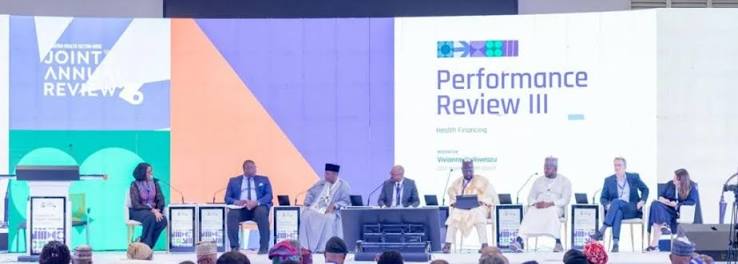
The Federal Government says it is spending approximately $280 million on immunisation and plans to commit another $539 million to programmes targeting HIV, tuberculosis and malaria, as Nigeria seeks to strengthen domestic financing for essential healthcare services.
Dr. Ado Muhammad, Special Assistant to the Director-General of the Budget Office of the Federation, disclosed the figures during a health financing panel at the 2026 Joint Annual Review in Abuja on Tuesday.
Muhammad said the scale of the financial commitments made it necessary for state governments to take greater responsibility for funding major health interventions, warning that the Federal Government could not sustain the programmes alone.
He said the proposed funding for tuberculosis, malaria and HIV would place additional demands on public resources, making cooperation between federal and state governments essential.
The government is preparing a proposal for submission to the National Economic Council to encourage subnational authorities to contribute towards the cost of the programmes.
Muhammad stressed that approving funds in annual budgets was not enough, arguing that governments must ensure the money was released and spent effectively.
He said health financing should be assessed through actual budget releases, expenditure and measurable results rather than allocations alone.
At the same event, Dr. Francis Ayomoh, Head of the Health Financing Division at the Federal Ministry of Health and Social Welfare, said government expenditure as a share of total health spending increased from 13.3 per cent in 2015 to 26.4 per cent in 2024.
Government health expenditure per capita also rose from approximately N3,000 in 2015 to N12,000 in 2024.
However, households continue to bear a substantial proportion of healthcare costs. Ayomoh said out-of-pocket expenditure declined from 71.7 per cent of current health expenditure in 2022 to 62.2 per cent in 2024.
He said the government was targeting a further reduction to between 20 and 30 per cent, highlighting the need to expand financial protection and access to affordable healthcare.
Ayomoh also disclosed that development partners committed $1.7 billion to Nigeria’s health sector in 2026, compared with $1.6 billion mapped in 2024 and $1.3 billion in 2025. He said fluctuations in external funding made stronger domestic resource mobilisation increasingly important.
He called for increased contributions from state and local governments, improved budget execution and a review of the 2017 National Health Financing Policy and Strategy to reflect current economic realities.
The World Bank’s Lead Economist, Owen Smith, said Nigeria needed to increase public health spending while improving the efficiency of available resources. He identified primary healthcare staffing, timely fund releases and better coordination among development partners as priorities.
Similarly, Juliet Whitley, Head of Health and Demography at the Foreign, Commonwealth and Development Office, urged states to strengthen domestic financing for vaccines and called for development partners to coordinate their support more effectively.
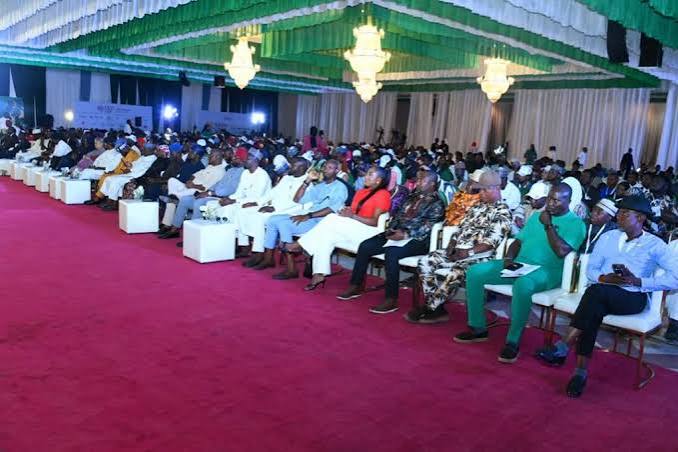
The three-day Joint Annual Review, themed “Together to Higher Grounds: Make the Data Count”, brought together federal and state governments, development partners, civil society organisations and other stakeholders to assess health sector performance.
The discussions come as Nigeria faces pressure to sustain essential health programmes amid changing global health financing arrangements. The proposed funding for HIV, tuberculosis and malaria, alongside immunisation spending, underscores the importance of predictable domestic resources and effective coordination across all levels of government.








Leave a comment