


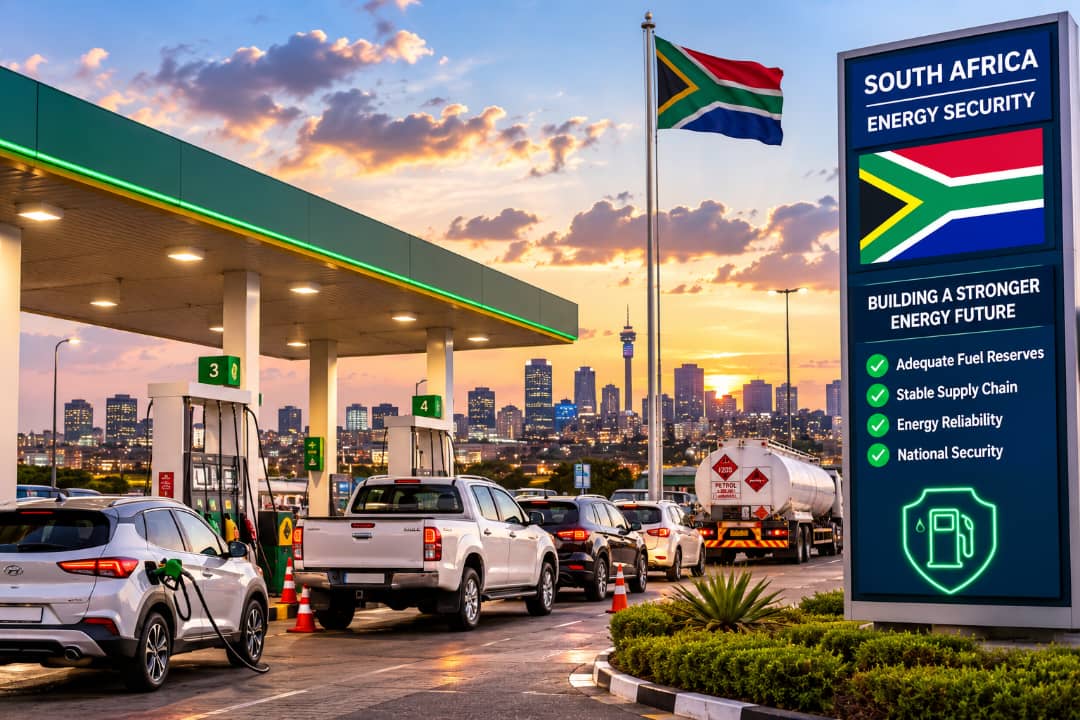
South Africa is moving to strengthen its energy security through a proposed policy that would require both government and private fuel companies to maintain strategic petroleum reserves, marking one of the country’s most significant energy resilience initiatives in recent years.
The draft Strategic Fuel Stocks Policy seeks to reduce South Africa’s vulnerability to global supply disruptions by ensuring adequate fuel reserves are available during emergencies. Under the proposal, licensed fuel wholesalers and importers would maintain fuel stocks equivalent to approximately 21 days of national demand, while government strategic reserves would provide an additional buffer of up to 60 days.
The proposal comes at a time when geopolitical tensions, disruptions to global shipping routes and volatility in international oil markets continue to expose the risks associated with heavy dependence on imported refined petroleum products.
South Africa has become increasingly reliant on imported fuels following the closure or reduced operations of several domestic refineries over the past few years. This structural shift has increased the country’s exposure to fluctuations in international fuel markets and supply chain disruptions.
Energy analysts say maintaining strategic reserves is an internationally recognized approach to improving national energy security. Countries with adequate fuel reserves are generally better positioned to cushion temporary supply shocks caused by geopolitical conflicts, natural disasters, refinery outages or disruptions to international shipping.
For businesses, the proposed policy could provide greater certainty across industries that rely heavily on stable fuel supplies, including manufacturing, mining, logistics, agriculture and aviation. More predictable fuel availability may help reduce operational risks associated with unexpected supply shortages.
The proposal also presents investment opportunities across the downstream petroleum value chain. Increased storage requirements could stimulate investment in fuel terminals, storage facilities, pipeline infrastructure and logistics services. Engineering firms, infrastructure developers and energy service providers may also benefit from projects linked to expanding strategic storage capacity.
The policy is equally relevant beyond South Africa. Many African economies remain heavily dependent on imported petroleum products and face similar challenges whenever global supply chains are disrupted. The proposal may therefore serve as a reference point for other governments seeking to strengthen national energy resilience.
As African countries pursue industrialization under the African Continental Free Trade Area (AfCFTA), reliable energy supply will remain a critical factor in supporting manufacturing competitiveness, regional trade and economic growth.
Industry stakeholders are expected to provide feedback on the draft policy before final implementation. If adopted, the initiative could become one of Africa’s most comprehensive strategic fuel security frameworks.
Why It Matters to Africa
Energy security remains one of the continent’s most important economic priorities. Stable fuel supplies reduce production costs, improve investor confidence and strengthen the resilience of African economies against external shocks. South Africa’s proposal could encourage similar reforms across other African countries seeking to modernize their downstream petroleum sectors.
Business Impact
Increased investment opportunities in fuel storage infrastructure.
Potential growth in logistics and petroleum distribution services.
Improved confidence for manufacturers and transport operators.
Stronger resilience against international oil supply disruptions.
Potential model for regional energy security policies.
Key Takeaways
South Africa proposes mandatory fuel reserves for government and private operators.
The policy aims to reduce vulnerability to global supply disruptions.
Expanded fuel storage could attract new infrastructure investments.
Reliable energy supply supports industrialization and regional trade.
The initiative may influence energy policy reforms across Africa.










Leave a comment