


If last week’s draw against Spain felt like a fluke, Sunday’s result against Uruguay made it impossible to look away. Cape Verde, the tiny island nation making its World Cup debut in the expanded 48-team tournament, came from behind again to hold Uruguay to a 2-2 draw, sending one of the most unlikely and most joyful stories of this World Cup into an entirely new chapter.
Kevin Pina wrote his name into Cape Verdean football history by scoring from a free kick, the country’s very first goal at a World Cup. Then Helio Varela added the equaliser that secured the point and, with it, a genuine shot at reaching the knockout stages. Two matches in, two comebacks, two draws. Against Spain and Uruguay. Cape Verde have announced themselves to the world and the world is paying attention.
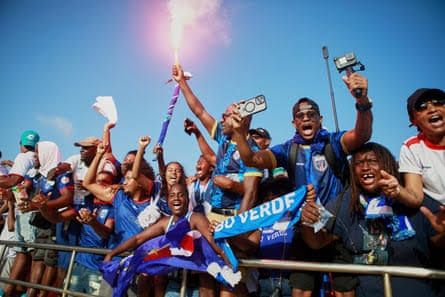
The scenes inside the stadium were matched and perhaps surpassed by what happened thousands of kilometres away in Brockton, Massachusetts, home to one of the largest Cape Verdean communities in the United States. A watch party at a local restaurant became something much bigger when the final whistle blew. Celebrations spilled out onto the streets, car horns rang through the night, flags and jerseys were waved from windows, and fireworks lit up the sky above a community living every moment of their country’s extraordinary debut from across the Atlantic.
Denise Mendes, a Cape Verdean living in the US, captured the spirit of the moment with words that deserve to be remembered. “We come from a lineage of being comeback champs. So we’re here to compete. So don’t underestimate CV because we’re going to go as far as we can get. But as far as I’m concerned, I’m very proud of my country because we’ve definitely made headway. Yeah, made ourselves known.” She is right on every count. Cape Verde have made themselves known, in the best possible way.
There is a particular kind of joy that belongs to the smallest nations at the biggest tournaments. It is the joy of a country that was never supposed to be here, that had to fight through every qualifying round to earn their place, arriving on the grandest stage and refusing to be overawed by it. Cape Verde have a population of fewer than 600,000 people. They are playing against nations of tens of millions with professional leagues, multi-million dollar squads, and decades of World Cup experience. None of that has mattered so far. They came from behind against Spain. They came from behind against Uruguay. They are still standing.
Next up is Saudi Arabia on Saturday, a match that Cape Verde will enter with two points, considerable momentum, and an entire nation watching from home and from diaspora communities scattered across the globe. A win or another draw could put them through to the knockout stages for the first time in their history. The dream that felt improbable a week ago now feels entirely, stubbornly possible. Cape Verde are not done yet. They might just be getting started.
If last week’s draw against Spain felt like a fluke, Sunday’s result against Uruguay made it impossible to look away. Cape Verde, the tiny island nation making its World Cup debut in the expanded 48-team tournament, came from behind again to hold Uruguay to a 2-2 draw, sending one of the most unlikely and most joyful stories of this World Cup into an entirely new chapter.
Kevin Pina wrote his name into Cape Verdean football history by scoring from a free kick, the country’s very first goal at a World Cup. Then Helio Varela added the equaliser that secured the point and, with it, a genuine shot at reaching the knockout stages. Two matches in, two comebacks, two draws. Against Spain and Uruguay. Cape Verde have announced themselves to the world and the world is paying attention.
The scenes inside the stadium were matched and perhaps surpassed by what happened thousands of kilometres away in Brockton, Massachusetts, home to one of the largest Cape Verdean communities in the United States. A watch party at a local restaurant became something much bigger when the final whistle blew. Celebrations spilled out onto the streets, car horns rang through the night, flags and jerseys were waved from windows, and fireworks lit up the sky above a community living every moment of their country’s extraordinary debut from across the Atlantic.
Denise Mendes, a Cape Verdean living in the US, captured the spirit of the moment with words that deserve to be remembered. “We come from a lineage of being comeback champs. So we’re here to compete. So don’t underestimate CV because we’re going to go as far as we can get. But as far as I’m concerned, I’m very proud of my country because we’ve definitely made headway. Yeah, made ourselves known.” She is right on every count. Cape Verde has made itself known in the best possible way.
There is a particular kind of joy that belongs to the smallest nations at the biggest tournaments. It is the joy of a country that was never supposed to be here, that had to fight through every qualifying round to earn its place, arriving on the grandest stage and refusing to be overawed by it. Cape Verde has a population of fewer than 600,000 people. They are playing against nations of tens of millions with professional leagues, multi-million dollar squads, and decades of World Cup experience. None of that has mattered so far. They came from behind against Spain. They came from behind against Uruguay. They are still standing.
Next up is Saudi Arabia on Saturday, a match that Cape Verde will enter with two points, considerable momentum, and an entire nation watching from home and from diaspora communities scattered across the globe. A win or another draw could put them through to the knockout stages for the first time in their history. The dream that felt improbable a week ago now feels entirely, stubbornly possible. Cape Verde are not done yet. They might just be getting started.







Leave a comment