


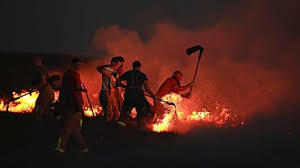
Europe is dangerously unprepared to cope with worsening wildfires, according to a new report that warns the continent faces a rapidly escalating fire crisis driven by climate change and structural weaknesses in preparedness.
The report highlights that wildfire seasons are becoming longer and more intense, now stretching beyond the traditional summer months and spreading into northern regions such as Sweden, Finland, and Denmark.
In 2025 alone, wildfires burned more than 1 million hectares across the European Union, marking the worst year on record. Countries including Spain, Portugal, Greece, and France were among the hardest hit, underscoring the scale of the growing threat.
Analysts attribute the worsening situation to a combination of climate change, rural depopulation, and the buildup of flammable vegetation, all of which increase fire risk and make containment more difficult.
The report also warns that Europe’s firefighting capacity is not keeping pace with the threat. A shortage of aircraft, delays in production of new firefighting planes, and bureaucratic hurdles are limiting response capabilities. Workforce constraints, including a lack of trained personnel and complex licensing requirements for foreign pilots, are further straining the system.
Although the European Union has committed funding to expand its aerial firefighting fleet and has begun building a shared rapid response force, experts say these measures may not be sufficient without broader structural reforms and faster implementation.
The findings add to growing warnings from climate advisers that Europe is lagging in adapting to extreme weather risks, including wildfires, floods, and heatwaves, despite being the fastest warming continent.
Overall, the report paints a stark picture: without urgent investment, better coordination, and long term prevention strategies, Europe could face increasingly destructive wildfire seasons with significant environmental, economic, and human costs.











Leave a comment