


Senegal’s victory in the 2026 Africa Cup of Nations final will be remembered as one of the most dramatic and contentious moments in the tournament’s history. What should have been a celebration of African football excellence instead became a flashpoint for debate around officiating standards, player protest, and the limits of sportsmanship on the continent’s biggest football stage.
The final, which brought together two of Africa’s most formidable footballing nations, was fiercely contested from the opening whistle. Senegal entered the match as favourites, carrying the weight of expectation that comes with a golden generation of players and recent continental success. Their opponents were equally determined, matching Senegal’s intensity and tactical discipline, making the game a tight and emotionally charged affair.
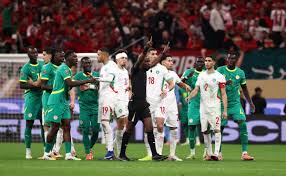
The turning point came midway through the second half. With the score level and tensions already high, the referee awarded a penalty against Senegal following a challenge inside the box. Replays shown inside the stadium and on broadcast feeds appeared inconclusive at best, with many observers arguing that the contact was minimal and that the defender had made a legitimate attempt to play the ball. Senegalese players immediately surrounded the referee, protesting the decision and demanding a review.
At the heart of the controversy was the use of video assistant referee technology. While VAR has been introduced to improve decision making in African football, its application has remained inconsistent across competitions. In this instance, Senegal’s players and technical bench believed the referee either failed to properly consult VAR or interpreted the footage in a way that contradicted what they saw on the screens. The penalty was upheld, sparking outrage among the Senegalese camp.
As the opposing team prepared to take the spot kick, Senegal’s captain led his teammates into a brief on field discussion. What followed stunned fans, officials, and viewers across the continent. In a rare and unprecedented act at an AFCON final, Senegal’s players walked off the pitch in protest, temporarily halting the match. The decision was clearly premeditated, driven by a sense that the integrity of the final had been compromised.
The walk off triggered confusion inside the stadium. Match officials consulted tournament organizers, security personnel attempted to manage the growing unrest among fans, and broadcasters struggled to explain the unfolding situation. After several minutes, Senegal returned to the pitch following assurances from officials that the game would continue under protest and that the incident would be reviewed after the match.
The penalty was eventually taken and converted, giving Senegal’s opponents a brief advantage. However, rather than collapsing, Senegal responded with remarkable composure and resolve. Channeling their frustration into disciplined play, they pressed higher up the pitch and regained control of the game. Their equalizer came from open play, followed by a decisive late goal that sealed the win and the AFCON title.
Despite lifting the trophy, the post match narrative was dominated by the controversy. Senegal’s head coach described the penalty decision as unjust and the walk off as a last resort after repeated appeals were ignored. He emphasized that the action was not intended to disrespect the competition but to draw attention to what he described as systemic officiating issues that continue to undermine confidence in African football governance.
Reactions across Africa were deeply divided. Some fans praised Senegal for standing up against what they viewed as unfair treatment, arguing that player protests are sometimes the only way to force accountability. Others criticized the walk off as dangerous precedent, warning that such actions could erode discipline and disrupt the spirit of fair play if normalized.
Football administrators and former players weighed in, calling for urgent reforms. Many pointed to the need for clearer VAR protocols, better referee training, and transparent post match explanations for major decisions. The Confederation of African Football announced an internal review of the final, acknowledging the widespread concern and promising to address officiating standards moving forward.
In the end, the 2026 AFCON final became more than a football match. It exposed the growing pains of African football as it balances technological advancement, institutional credibility, and player empowerment. Senegal’s triumph, while historic, will forever be intertwined with the moment their players chose protest over silence, forcing the continent to confront uncomfortable questions about fairness, authority, and the future of the game.











Leave a comment