


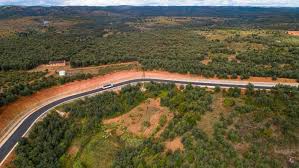
The red wooden post hammered into the soil near the Malagasy village of Ambohidava is small and unassuming, yet it signals a change that could permanently alter the lives of everyone who lives there. On a calm, sunlit afternoon, the village feels untouched by urgency. Roosters crow, a motorbike passes occasionally, and daily life unfolds at an unhurried rural pace. But beneath this tranquillity lies a growing unease.
If current plans proceed, Ambohidava may no longer exist in two years’ time. In its place, a two lane toll highway is expected to cut directly through the village, forming part of a major transport link between Madagascar’s capital, Antananarivo, and Toamasina, the country’s main port and second largest city.
Today, Ambohidava sits about a two hour drive from the capital. The new highway promises to dramatically reduce travel times and ease the movement of goods and people across the country. Supporters of the project believe it could help unlock economic growth, modernise transport infrastructure and strengthen Madagascar’s connection to regional and global markets. Yet for the roughly 500 residents of this village, progress comes with profound personal cost.
Few stories capture this reality more clearly than that of Neny Fara. Now 70 years old, she has lived in Ambohidava all her life. She began farming rice and pineapples at the age of four, working land cultivated by her ancestors for generations. Small in stature but strong in spirit, she welcomes visitors into the modest home she shares with her husband, Adrianavony, serving a traditional Malagasy meal of chicken and rice.
Farming has sustained her family for decades, including a son who cannot work due to mental health challenges. Yet both her rice paddies and pineapple fields fall directly along the planned route of the highway.
“It hurts me. I feel like I have been stabbed in the back,” she says quietly as she walks down to her rice field. “This land has been ours for generations. No one has spoken to us about what will happen. It is heartbreaking.”
Her concerns are echoed by many farmers in the surrounding area. Villagers say they have not been consulted meaningfully about the project and that no clear compensation arrangements have been communicated. Government authorities maintain that compensation will be provided within a year of construction, but uncertainty remains widespread and trust is fragile.
The highway project was commissioned by former President Andriy Rajoelina, who officially opened the first eight kilometres during a regional summit in August. Although he was later deposed in an October coup, the new government has confirmed that the project will continue.
Constructed by the Egyptian firm Sancrete, the highway is expected to stretch approximately 260 kilometres. The estimated cost of the project is around one billion dollars, with about 20 percent funded by the Malagasy state and the remainder sourced from international partners, including development banks. Once completed, toll fees are expected to be around four dollars for cars and five dollars for lorries.
The contrast between the newly completed stretch and much of Madagascar’s existing road network is stark. Smooth tarmac, clear markings and efficient design stand in sharp opposition to the often deteriorated national roads that dominate the country. The current Route Nationale 2, which links Antananarivo and Toamasina, is notorious for traffic congestion, deep potholes and slow travel through towns and villages. Along the way, it is not uncommon to see elderly women filling potholes with dirt in exchange for small tips from passing drivers.
From a national perspective, the new highway represents long awaited progress. For communities like Ambohidava, however, it raises urgent questions about development, displacement and whose lives are sacrificed in the pursuit of economic transformation.
As red posts continue to appear across fields and farmland, they stand not just as markers of a future road, but as symbols of an unresolved tension between national ambition and local survival. Whether Madagascar can deliver growth without erasing the histories and livelihoods of its rural communities remains an open and deeply human question.








Leave a comment