


Rwanda-backed M23 rebels have entered the eastern Congolese town of Uvira, near the border with Burundi, marking the most significant escalation in months in the long-running conflict in the region. Uvira, located on the shores of Lake Tanganyika, has historically served as the headquarters of the Congolese government in South Kivu province and as a regional military base. Its strategic location makes it a critical point for controlling access to the wider region, and its capture could pave the way for M23 to advance further beyond South Kivu.
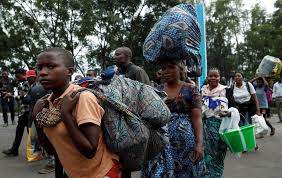
Residents described scenes of chaos as heavy gunfire and artillery exchanges echoed through the town. Many civilians fled across the border into Burundi, seeking safety from the escalating violence. Some reported seeing columns of armed rebels moving through major streets, while others noted that certain government positions appeared lightly defended, raising fears of potential massacres if full-scale resistance occurs.
The entry of M23 comes despite a recent peace deal brokered by U.S. President Donald Trump between DR Congo’s President Félix Tshisekedi and Rwandan President Paul Kagame, aimed at ending persistent hostilities in the mineral-rich region. The rebel group, which has previously received backing from Rwanda, claimed to have “liberated” Uvira, though Congolese authorities insist that their forces, along with allied militias, are still attempting to control the city. South Kivu Governor Jean-Jacques Purusi confirmed that fighting continues, emphasizing that the situation remains fluid.
Burundi has responded to the influx of fleeing civilians by closing its border with DR Congo to manage the humanitarian situation and prevent further destabilization. The escalating violence highlights the fragile security situation in eastern DR Congo, where multiple armed groups compete for control over territories rich in minerals such as gold, coltan, and tin. Analysts warn that without sustained international attention and strict enforcement of peace agreements, the region remains at high risk of further conflict, widespread displacement, and a deepening humanitarian crisis.
Residents of Uvira are struggling to carry on with daily life. Shops and schools remain closed, and most people are confined to their homes, living under a constant sense of fear and uncertainty. The situation reflects the ongoing human cost of the prolonged conflict in eastern DR Congo, where civilians continue to bear the brunt of armed confrontations.
Humanitarian organizations are monitoring the situation closely, warning that without urgent intervention, the conflict could spiral further, exacerbating the displacement of thousands and compounding existing food insecurity in the region. The international community faces renewed pressure to act decisively to enforce peace agreements, protect civilians, and stabilize this critical part of Central Africa.
The events in Uvira serve as a stark reminder that peace deals alone are insufficient if rebel groups and state actors fail to uphold their commitments. For the residents caught in the crossfire, each day remains uncertain, with safety, basic services, and access to livelihoods hanging in the balance.







Leave a comment