


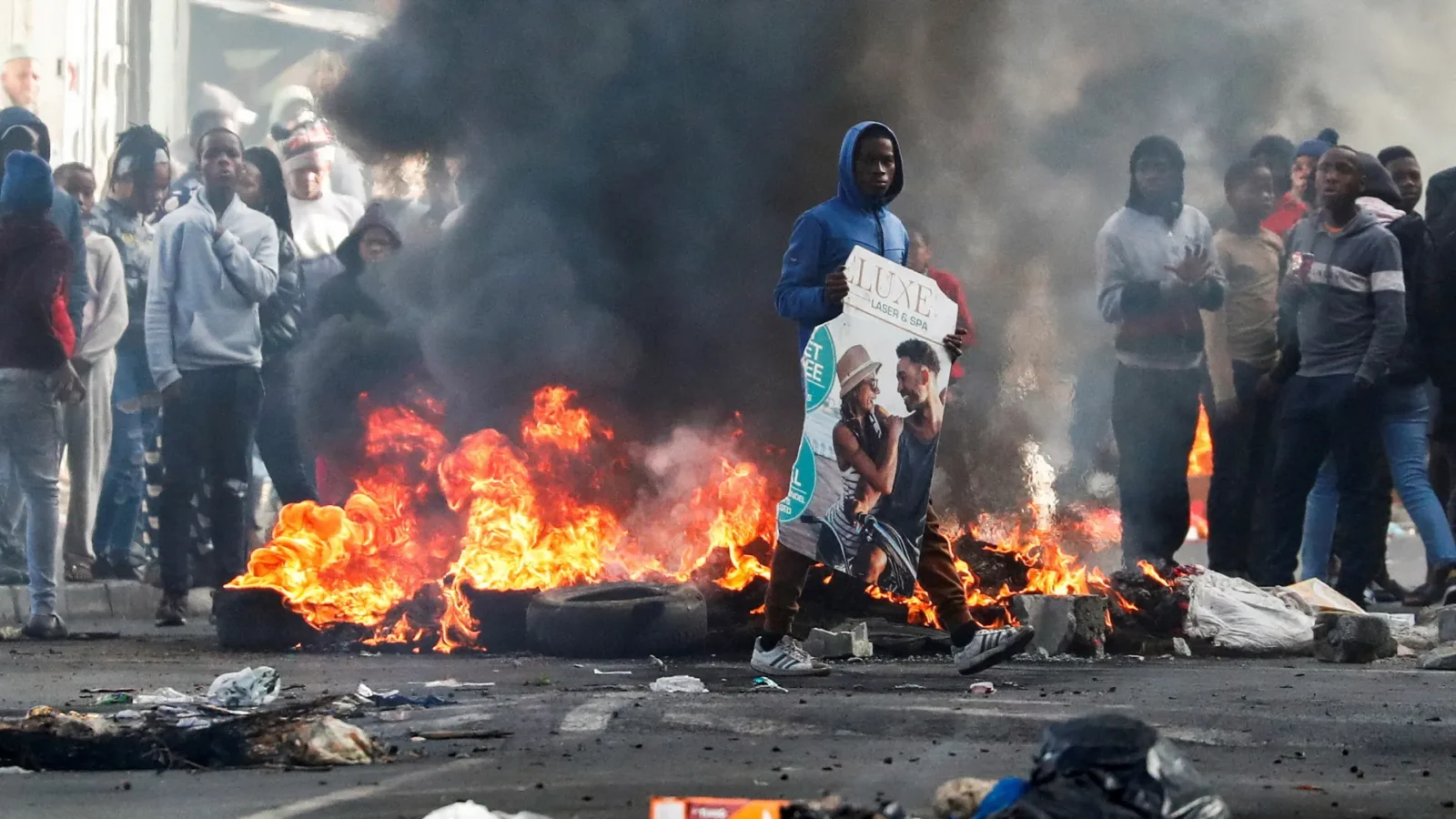
The South African National Taxi Council (SANTACO) has announced a firm zero-tolerance stance on violence within the taxi industry, promising to expel any member found guilty of violent acts. Speaking at a media briefing in Johannesburg, SANTACO president Motlabane Tsebe emphasized that the era of violence linked to the taxi sector must come to an end, declaring that the council is committed to reform, accountability, and restoring public trust.
Tsebe’s remarks follow a disturbing incident outside Maponya Mall last week, where two e-hailing vehicles were attacked, resulting in one driver losing his life and two others sustaining injuries. While the attack has sparked renewed debate about tensions between taxi operators and e-hailing drivers, SANTACO strongly denied involvement, distancing its members from the tragic event. Tsebe stressed that any acts of violence attributed to the taxi industry must be reported to the council and to law enforcement authorities so that immediate expulsions and investigations can take place.
In addressing the longstanding perception of the taxi industry as a sector marred by intimidation, shootings, and assaults, Tsebe issued an appeal to the public, asking for forgiveness while also acknowledging past wrongs. He highlighted that SANTACO is determined to turn the page and rebuild the image of the taxi industry, which plays a critical role in South Africa’s transport system.
“We condemn this violence in the strongest possible way,” Tsebe said. “It is inhumane, it is criminal, and it is unacceptable. We are saying zero tolerance to violence, we can’t be coming with another pandemic that is troubling our nation for a week.” His words underscored the seriousness of SANTACO’s commitment to eradicating violence, instilling discipline among its members, and fostering a safer environment for commuters and operators alike.
The announcement also comes at a time when tensions between traditional taxi operators and e-hailing services such as Uber and Bolt continue to escalate, with both sides accusing each other of unfair practices and territorial disputes. SANTACO’s leadership believes that only through accountability, dialogue, and decisive action against violence can these issues be resolved without further bloodshed.
By adopting a zero-tolerance approach, SANTACO hopes to strengthen relations with the public, government, and other stakeholders, aligning itself with national efforts to build a safer, more reliable public transport system. Tsebe concluded by reaffirming his confidence in the council’s ability to restore order and ensure that the taxi industry sheds its reputation for violence once and for all.












Leave a comment