


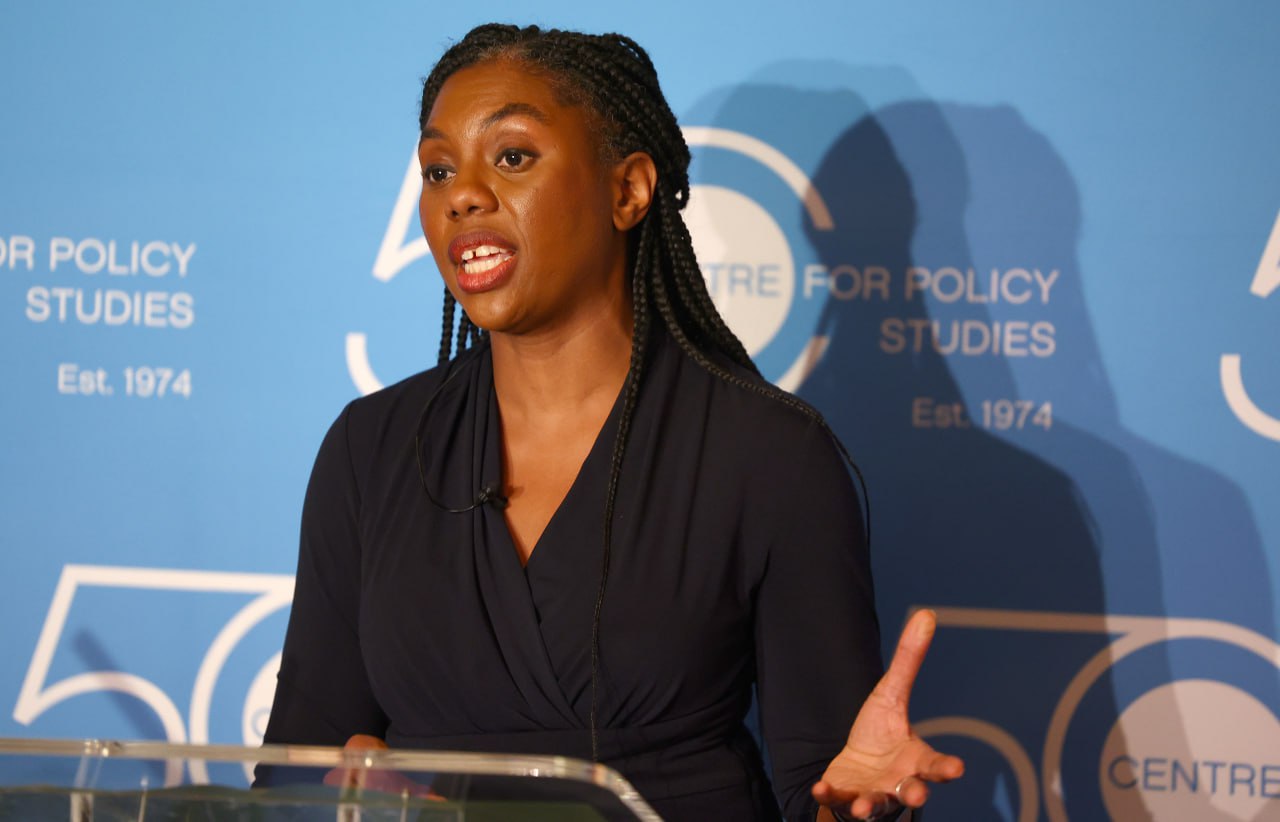
Nigerian Vice President Kashim Shettima has criticized Kemi Badenoch, the UK Conservative Party leader of Nigerian descent, for her public remarks denigrating Nigeria, her country of origin. Shettima’s comments came during the 10th Annual Migration Dialogue held at the State House in Abuja, where he expressed both pride in Badenoch’s achievements and disappointment at her negative portrayal of Nigeria.
“Kemi Badenoch, the leader of the British Conservative Party… we are proud of her despite her efforts at denigrating her nation of origin,” Shettima stated, underscoring the complex relationship between Nigeria and its diaspora leaders who achieve prominence abroad.
Badenoch, who was born in London to Nigerian parents and spent part of her childhood in Lagos before moving back to the UK at age 16, has regularly made critical statements about Nigeria. Speaking recently at the International Democracy Union Forum in Washington, Badenoch contrasted her experiences in the UK with her upbringing in Nigeria, where she witnessed economic hardship and political mismanagement.
“I was lucky in my experiences. I was born to a relatively wealthy family and had a decent education. But I also know what it is like to be poor. I watched my family become poor as their wealth, income, and savings were inflated away by destructive government policies,” Badenoch said. Her remarks reflect her perspective on governance in Nigeria compared to the opportunities and freedoms she has experienced in the UK.
Badenoch’s statements, however, have not been well-received in Nigeria, particularly among government officials and segments of the public. Local media have also reported on a general lack of engagement between Badenoch’s office and Nigerian diplomatic outreach, further straining perceptions of her commitment to her Nigerian heritage.
While Vice President Shettima acknowledged Badenoch’s right to express her opinions, he pushed back against her narrative, emphasizing Nigeria’s status as a major global player and its growing influence.
“She is entitled to her own opinions; she has even every right to remove the ‘Kemi’ [a Yoruba female name] from her name, but that does not underscore the fact that the greatest black nation on earth is the nation called Nigeria,” Shettima stated. His remarks resonated with themes of national pride and Nigeria’s significance as Africa’s most populous country and a leading economic and cultural force.
Shettima further highlighted Nigeria’s projected population growth and its emerging role on the global stage, reinforcing the country’s potential and resilience despite its challenges. “Nigeria’s influence cannot be ignored,” he said, in a message aimed at countering narratives that diminish the country’s progress and potential.
The exchange between Shettima and Badenoch speaks to broader debates about identity, heritage, and the roles diaspora leaders play in shaping perceptions of their countries of origin. Badenoch, who identifies strongly with British values, has often used her personal story to highlight political and economic freedoms in the UK while criticizing Nigeria’s governance challenges.
For many Nigerians, however, her remarks have been interpreted as dismissive of the country’s strides and struggles. Diaspora leaders, especially those in prominent positions, are often viewed as bridges between their adopted countries and their nations of origin. Their statements carry weight and can influence perceptions both locally and internationally.
Analysts note that Badenoch’s comments reflect a duality that many diaspora Nigerians experience: a sense of gratitude for opportunities abroad and a critical lens on their homeland’s challenges. However, they also argue that such criticisms must be balanced with recognition of Nigeria’s achievements and the efforts being made to address systemic issues.








Leave a comment