


Kenya has announced plans to restrict the export of raw gold, a significant step toward boosting local refining capabilities and fostering economic growth. Elijah Mwangi, Kenya’s Principal Secretary for Mining, revealed that the country is developing a policy to ensure that all gold mined in Kenya will be refined locally before export, marking a strategic shift in the nation’s approach to its mineral resources.
The new policy is designed to increase the value derived from the country’s natural resources by encouraging the development of domestic refining infrastructure. “Going forward, for all gold mined in Kenya, we are coming up with a policy to have it refined in Kenya,” Mwangi said, according to local media outlet Business Daily. By keeping the refining process within its borders, Kenya hopes to capture more of the revenue generated from gold production, create jobs, and stimulate growth in related industries.
This initiative is part of a broader strategy to modernize Kenya’s mining sector and strengthen its contribution to the national economy. The government has secured significant investments to support the construction of both gold refining and granite processing plants, reflecting its commitment to promoting local industrialization. The gold refining plant, a multibillion-shilling deal recently sealed between Kenya and private investors, is set to be constructed in Kakamega County, a region rich in gold deposits.
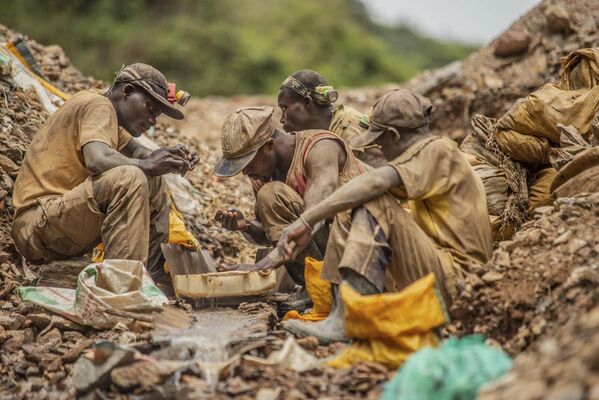
The Kakamega refinery will cost an estimated Sh5.8 billion (more than $38 million) and is expected to be completed by mid-2025. The facility will play a crucial role in refining gold from various mining sites across the country, including artisanal and small-scale operations. By processing the gold locally, Kenya aims to capture the full value of the precious metal, which will be beneficial for both the national economy and local communities involved in mining activities.
In addition to the gold refinery, Kenya is also investing in a granite processing plant, which will be located in Vihiga County. The Sh2.5 billion ($15 million) granite plant is part of the government’s push to diversify its mineral processing capabilities beyond precious metals. Granite, a key construction material, is in high demand both locally and internationally, and the establishment of the processing plant is expected to reduce reliance on imports and position Kenya as a regional hub for granite production.
These investments are a testament to Kenya’s broader vision of developing a robust, value-added mining sector. By encouraging the processing of raw materials within the country, Kenya seeks to not only boost exports of finished products but also reduce its dependency on the export of unprocessed minerals, which often results in lost revenue. For decades, African countries have grappled with the challenge of being resource-rich but exporting raw materials with minimal local processing, leaving them vulnerable to fluctuating global commodity prices and reduced economic benefits.
The introduction of these refining and processing plants signals a paradigm shift in Kenya’s approach to resource management. In addition to boosting revenue, the government expects these facilities to create employment opportunities, enhance local skills development, and attract further investment into the mining sector.
According to industry experts, Kenya’s decision to retain and refine its gold locally could have broader implications for the East African region. Other countries with significant mineral deposits may follow suit, seeking to capitalize on their natural resources by implementing similar policies that encourage local value addition. This move aligns with the broader African Union agenda of increasing industrialization and intra-African trade through initiatives such as the African Continental Free Trade Area (AfCFTA).










Leave a comment