


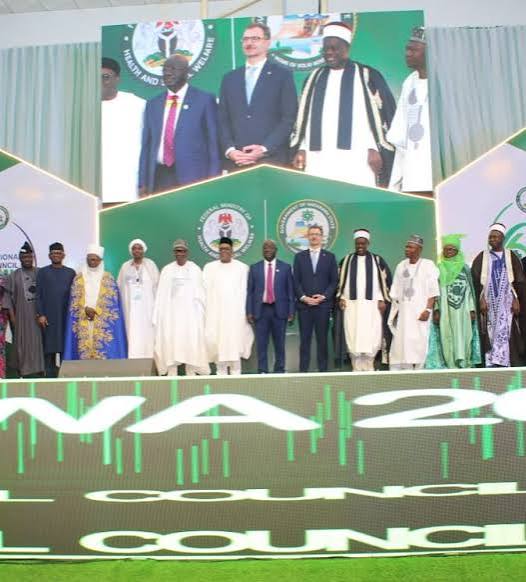
The Coordinating Minister of Health and Social Welfare, Prof. Muhammad Ali Pate, has commended state governments for increasing their combined health budgets from N1.97 trillion in 2023 to more than N3.3 trillion in 2026.
Pate described the increase of more than 67 per cent as progress in domestic health financing but urged governments to ensure that higher allocations translate into improved healthcare services.
He spoke on Thursday at the opening of the 67th Regular Session of the National Council on Health (NCH) in Lafia, Nasarawa State, under the theme, “From Commitments to Results: Delivering Quality and Equitable Healthcare for All Nigerians.”
The minister said the increased budgetary commitments were accompanied by efforts to strengthen local production of medicines and essential health commodities.
He disclosed that 10 pharmaceutical and medical production facilities had been commissioned, including six in 2026, producing medicines, rapid diagnostic test kits, mosquito nets and medical oxygen.
He added that Nigerian manufacturers had received more than N24 billion in tax waivers under the Presidential Executive Order signed in June 2024 to support local pharmaceutical production.
Pate also reported progress under the Nigeria Health Sector Renewal Investment Initiative, saying 41 health sector commitments had been achieved and 12 of 13 monitored health indicators had improved over the past three years.
He said skilled deliveries in facilities supported by the Basic Health Care Provision Fund increased from 4.8 million in 2023 to nearly eight million by mid-2026, while fourth antenatal care visits rose from six million to 8.7 million.
Health insurance coverage also expanded from about 16 million to nearly 24 million Nigerians, while almost 20,000 skilled birth attendants had been recruited across 22 states.
However, the minister warned that increased allocations alone would not guarantee better health outcomes without effective budget execution, transparency and accountability.
He disclosed that only 412 of the 740 expected reports on the implementation of 20 resolutions adopted at the previous National Council on Health meeting were received, representing 56 per cent.
Although all 36 states and the Federal Capital Territory submitted returns, no state reported on all 20 resolutions.
Pate urged state governments to assign clear responsibilities and delivery timelines to health sector commitments and submit quarterly implementation reports for monitoring and independent verification.
He also called for timely release of appropriated funds, expanded health insurance coverage for vulnerable populations and sustained investment in primary healthcare.
The minister noted that households continued to bear a significant share of healthcare expenditure, while government allocations remained below the 15 per cent benchmark set by the Abuja Declaration.
He further highlighted inequalities in access to skilled healthcare, particularly between rural and urban communities, and urged states to prioritise underserved populations.
The Emir of Shonga, Alhaji Haliru Yahaya, also called for greater discipline in the management of health sector resources, stressing the importance of adequate funding, coordination and community engagement.
He urged health authorities to work more closely with traditional institutions and local leaders to improve public understanding of health insurance and other government programmes.
The 67th National Council on Health brought together federal and state health authorities, development partners and other stakeholders to review sector performance and agree on priorities for improving healthcare delivery.
The discussions focused on ensuring that increased public investment produces measurable improvements in access, quality and affordability of healthcare across Nigeria.






Leave a comment